4WD Beach Driving for Anglers: Tyre Pressures, Tides and Recovery Gear
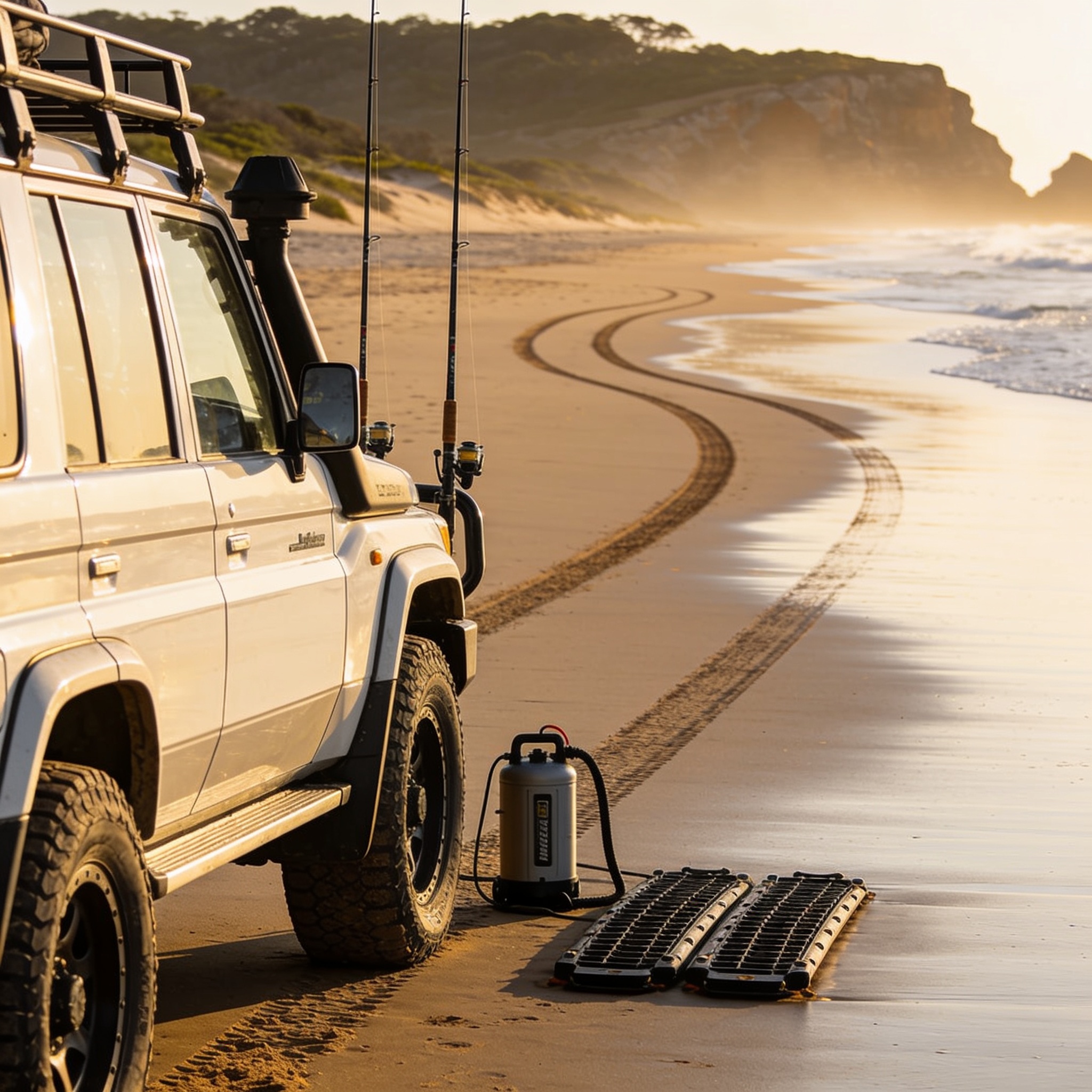
Why Sand Driving Is a Fishing Skill
For a lot of anglers around Sydney and up and down the coast, the best gutters and holes sit kilometres past the last car park. A four-wheel drive gets you there, but sand driving is its own discipline — closer to reading a beach than to driving a road. The same skills you use to spot a rip or a bank also tell you where the sand is soft, where the high-tide line sits, and whether you have a safe window to drive out and back before the water pushes you into the dunes.
Every trip should start with three questions: am I allowed to drive here, when does the tide let me, and can I get myself out if I stop moving? Answer those honestly and beach driving becomes routine. Skip them and you will eventually spend a sunset digging instead of casting.
Permits, Access Tracks and Local Rules
Beach access in Australia is managed by a patchwork of national parks agencies, councils and reserve trusts. Many popular stretches require a vehicle access permit, displayed on the windscreen, and some are closed seasonally to protect nesting shorebirds such as hooded plovers and little terns. Rules that commonly apply include:
- Enter and exit only via marked access tracks — never cut through dunes or vegetation.
- Keep to the hard sand below the high-tide mark where signage directs you to.
- Observe posted speed limits, which are often much lower than you would expect, and treat the beach as a shared space with walkers, kids and other anglers.
- Give way to swimmers and stay well clear of flagged patrolled areas.
- Check nesting-season closures before you leave home, not at the ramp.
Camping is a separate permission again. Some foreshore reserves allow designated beach or behind-the-dune camping with a booking; many do not allow it at all. Assume you need a booking, carry out every scrap of rubbish including bait packaging and old line, and use existing fire rings or a gas cooker rather than scavenging dune timber.
Tyre Pressures: The One Thing That Matters Most
Dropping pressures lengthens the tyre footprint so it floats rather than digs. As a general starting point on dry, soft beach sand, many drivers run in the region of 18 psi and go lower — down toward 15 psi or a little under — when the going gets heavy. Loaded vehicles, heavy rear-mounted rod holders and camping gear all change the picture, so adjust to your own setup and manufacturer guidance.
- Air down before you hit the sand, not after you are bogged.
- Reduce speed as you reduce pressure — low pressures and speed together roll tyres off rims.
- Avoid sharp steering inputs at low pressure; make wide, gentle turns.
- Re-inflate before returning to bitumen. Carry a compressor and an accurate gauge, and know your on-road pressures.
Momentum, not power, gets you through. Select the right gear early, keep steady throttle, and follow existing wheel ruts where they are firm. If you feel the vehicle bogging down, ease off rather than burying the wheels with more revs.
Reading Tides for Driving, Not Just Fishing
Tide planning for a 4WD trip has two layers. The first is fishing: the run-out and the first of the push often work best in beach gutters. The second is escape: you need firm, wide sand at both ends of the trip. A common approach is to drive out on a falling tide and be back off the beach well before the tide covers the hard sand or blocks a rocky headland bypass.
Note the times of low and high water for the nearest tide station, then subtract a generous safety margin — an hour or more — because beaches change and soft patches slow you down. Watch for creek and lagoon entrances that fill quickly, deep washouts near rock platforms, and steep-shelving sections where the only firm ground disappears at half tide. Never park below the high-tide mark while you fish, and never let salt water sit around your wheels.
Recovery Gear Worth Carrying
Recovery gear is cheap insurance compared with a saltwater write-off. A sensible kit for beach anglers includes:
- Long-handled shovel — the single most useful item for clearing sand from in front of tyres and the chassis.
- Compressor and gauge for airing down and back up.
- Rated recovery points, snatch strap and soft shackles, plus a dampener blanket. Never attach to towballs or tie-down eyes.
- Traction boards or maxtrax-style ramps, which shine where there is nothing to winch off.
- Tyre deflator and puncture repair kit, plus a serviceable spare.
- Communication — mobile coverage is patchy on remote beaches, so tell someone your plan and expected return time.
Basic technique: stop as soon as you feel the wheels spinning, get out and look, dig sand away from all four tyres, flatten a ramp in the direction of travel, drop pressures a little further, and reverse out along your own ruts if forward progress has failed. Straighten the steering before you try again.
Fishing Safely Once You Arrive
Park above the wrack line, nose out, on the firmest sand you can find. Keep rods, gaffs and knives secured while driving so nothing becomes a projectile. Carry more drinking water than you think you need, wear a hat and sun protection, and keep a first-aid kit and headlamp in the vehicle for after-dark walks back along the beach.
Finally, drive like the beach belongs to everyone, because it does. Slow down past other anglers, dip your headlights at night, keep clear of shorebird flocks resting on the sand, and leave your site cleaner than you found it. Questions about local access conditions? Get in touch with Beach Fishing Australia at [email protected] or +61240309140 during Mon–Fri: 09:00 – 17:00 (AEST) and we will point you toward the right land manager for the stretch you are planning to fish.

Navigation
See also
FAQ