The Paternoster Rig for Surf Fishing: Setup, Variations and When to Use It
Why the Paternoster Still Earns Its Place in the Surf
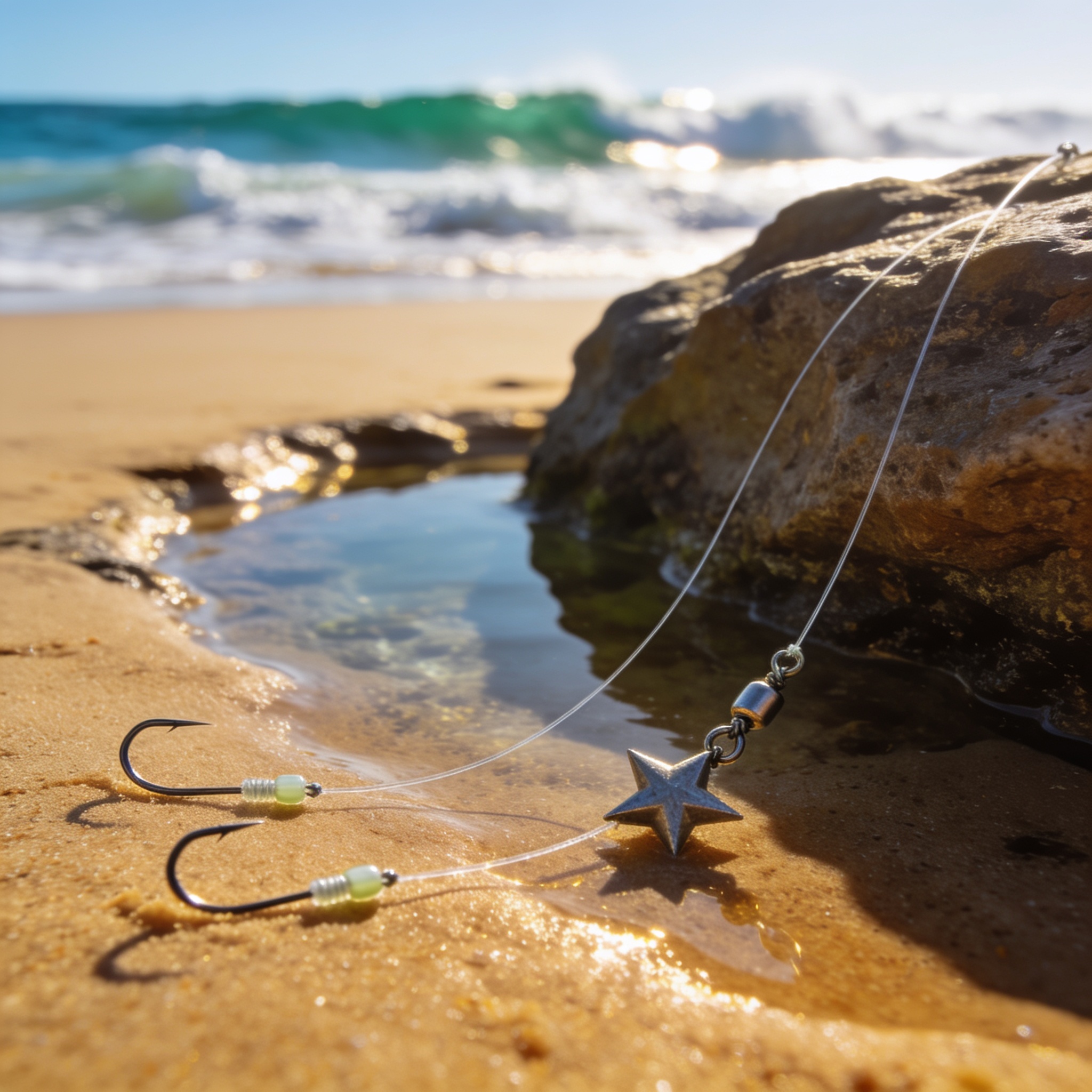
Walk any stretch of open beach from Cronulla to the Central Coast and you will find anglers using some version of the paternoster rig. Also called a dropper rig or bottom rig, it suspends one or more baited hooks on short droppers above a bottom-anchored sinker. That simple arrangement solves two of the biggest problems on an Australian surf beach: keeping bait off the sand where crabs and pickers strip it, and holding position in moving water without constantly rolling back to your feet.
The rig shines when you are fishing a gutter or hole with a discernible current, when you want to present two different baits at once to find out what is feeding, and when snags, weed or shell grit make a running sinker rig awkward. It is also forgiving for newer anglers, because the hooks sit clear of the mainline and tangle far less than long flowing traces during a heavy overhead cast.
Building a Basic Two-Dropper Paternoster
- Cut around 80 cm of 20 to 40 lb fluorocarbon or hard mono for the rig body. Heavier line holds the droppers away from the trace and stops them collapsing in the wash.
- Tie a small loop at the top for connecting to your mainline or shock leader, using a double surgeon's loop or a swivel if you prefer.
- Form two dropper loops down the body, spacing them roughly 25 to 30 cm apart. The lowest loop should sit about 20 cm above the sinker so the bottom bait drifts just above the sand.
- At the bottom, tie a loop or clip for your sinker. A weaker line to the sinker means you sacrifice lead, not the whole rig, when you snag.
- Attach hooks to the droppers with a loop-to-loop connection or by passing the loop through the eye and over the hook point. Keep dropper length short (7 to 10 cm) to reduce tangles.
Hook choice depends on the target: 1/0 to 2/0 long-shank for whiting and bream on beach worms, 3/0 to 5/0 suicide or circle patterns for tailor, salmon and mulloway. Sinker weight should be the lightest that still holds bottom — commonly 2 to 4 oz star or spike sinkers in a working gutter, and heavier again on a windy, high-energy beach.
Useful Variations
Single Dropper (High-Low Clean Rig)
One hook, one sinker, minimal hardware. Best for finicky whiting in shallow gutters where anything bulky spooks fish, and easiest to cast a long way with a light bait.
Long-Dropper Variant
Lengthen the top dropper to 30 to 40 cm so the bait waves in the current. Effective for salmon and tailor that hunt higher in the water column, though it tangles more on the cast.
Wire or Heavy-Trace Version
When tailor are chopping bait off cleanly, swap the top dropper for a short length of heavy 60 to 80 lb mono. Full wire trace can cut bites on bright, clear days, so use it only when you are losing multiple rigs.
Pilchard Paternoster with Ganged Hooks
Run a set of three or four ganged hooks off a single strong dropper for whole pilchards or garfish. This is the classic dawn tailor and mulloway presentation on Sydney's northern and southern beaches.
When to Choose Something Else
The paternoster is not universal. In a shallow, gently sloping wash where whiting graze right in the foam, a running sinker rig that lets fish move off with the bait often converts more bites. For a long soak targeting big mulloway with a live tailor or squid, most anglers prefer a single-hook running rig with a longer trace so the bait can swim naturally. And in very heavy weed, droppers collect ribbon weed quickly and you may be better with a low-profile sliding setup.
Bait Pairing and Presentation
Because the paternoster gives you two positions, use them to test different offerings. A common Sydney combination is beach worm or pipi on the bottom dropper and a strip of squid or pilchard fillet up top. Bind soft baits with a few wraps of bait elastic — a paternoster casts hard and unsecured baits fly off. For more on matching offerings to conditions, see our notes on baits, berley and lures for the surf, including how a light berley trail near the gutter mouth can concentrate fish within casting range.
Fishing the Rig Properly
Cast to the edge of a gutter rather than beyond it, then take up slack until you feel the sinker set. Keep the rod tip high in a sand spike so the mainline stays clear of breaking waves, and re-tension every couple of minutes as the sinker settles. Refresh baits every ten to fifteen minutes; washed-out bait catches very little. If the sinker rolls constantly, step up one weight or move to a spike style with wire grips.
Always fish with an eye on the swell, never turn your back on the water, and avoid low rock ledges and steep unstable banks. Questions about rigs, local beach conditions or Sydney access points are welcome — reach the Beach Fishing Australia team on +61240309140 or [email protected] during Mon–Fri: 09:00 – 17:00 (AEST).

Navigation
See also
FAQ