Running Sinker Rigs on the Beach: Sensitivity at Distance
Why the Running Sinker Still Wins on Sand
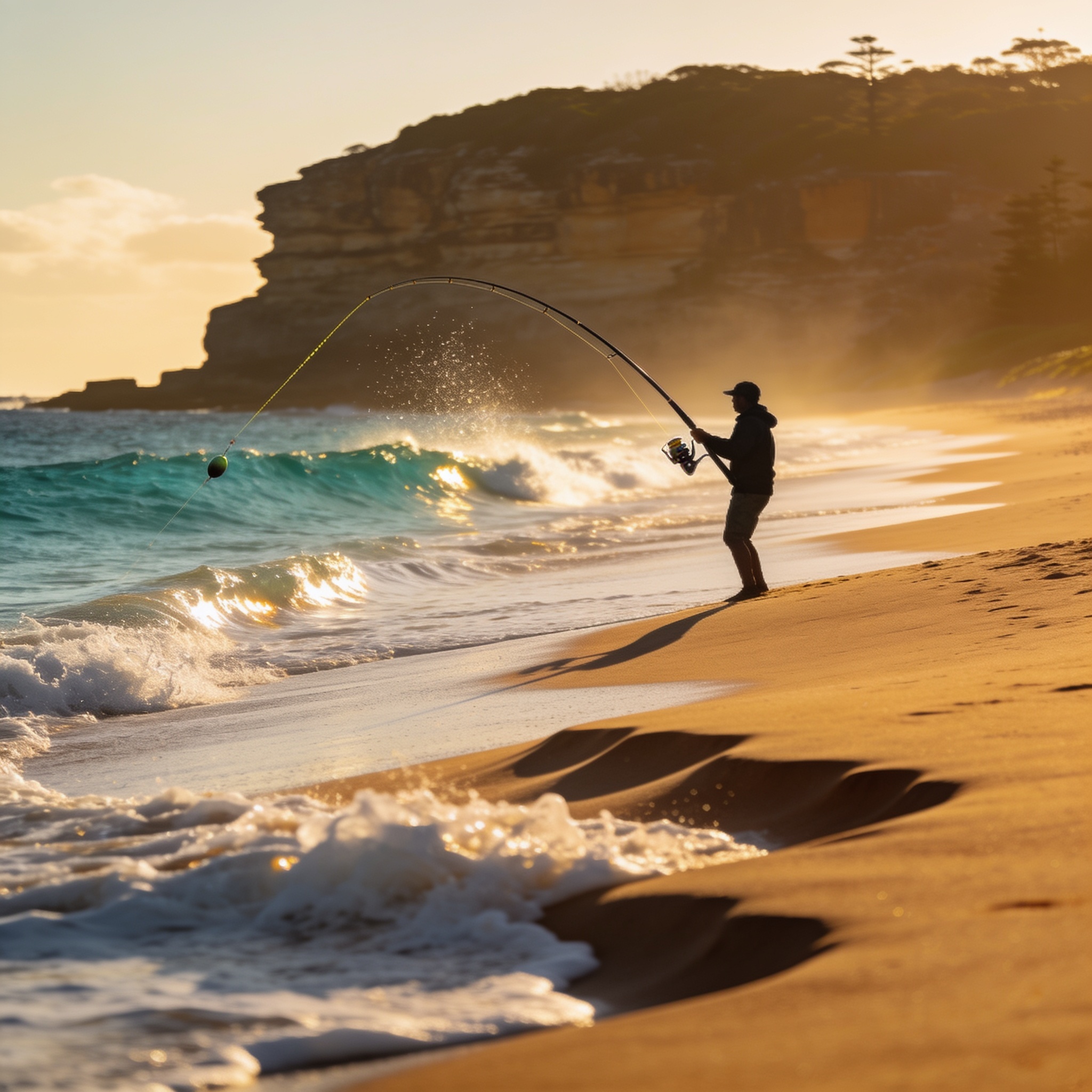
Of all the rigs carried in a surf fisher's tackle box, the running sinker is the one that keeps earning its place. The concept is simple: the sinker slides freely on the mainline or a short section of leader, so a fish can pick up the bait and move off without immediately feeling the weight. On the open beaches around Sydney — where whiting, bream, dart, tailor and mulloway all cruise the same gutters at different hours — that fraction of a second of resistance-free movement is often the difference between a clean hook-up and a stripped bait.
The trade-off is sensitivity versus casting distance. A long, soft trace presents beautifully in the wash but tangles in flight and dulls bite detection at range. The craft of the running sinker on the beach is balancing those two forces for the conditions in front of you.
Building the Rig
- Sinker: thread a ball or bean sinker onto the mainline. Ball sinkers roll and search; bean sinkers hold better in moderate side-sweep. Match weight to swell, not to habit — a size 2 ball may be plenty in a calm corner, while a heavy sweep at an exposed beach can demand 60–85 g of star or snapper lead.
- Buffer bead: a small plastic bead below the sinker protects the knot from being hammered on the cast.
- Swivel: a quality black swivel stops the sinker running down onto the hook and reduces line twist from a spinning bait.
- Leader: tie 40 cm to 1.2 m of fluorocarbon or clear mono. Short for distance and clean water, long for a slow drift over a shallow bank.
- Hook: a long-shank for worms and nippers, a circle or suicide pattern for pilchard and slab baits, a two-hook snelled set for anything cut and bulky.
Sensitivity at Distance: The Real Problem
At 60 m the bite you feel is a filtered, delayed version of what is actually happening. Stretch in the mainline, the belly of line pushed by the sweep, and the angle from rod tip to sinker all soften the signal. Three practical fixes:
- Braid mainline with a mono shock leader. Low stretch transmits taps that nylon absorbs. Keep a rod-and-a-half of heavier mono as a casting leader so you are not putting braid under the shock of a heavy lob.
- Tension, not slack. After the sinker settles, wind until the rod tip loads slightly. A dead-straight line to the weight is a nerve; a slack bow is a rumour.
- Rod angle. High tip lifts line clear of breaking waves in the wash zone and cuts false bites from tumbling foam. Drop the tip when you want the bait to hold on the bottom of a gutter.
Reading the Bite
Whiting deliver a rapid series of raps then a steady pull — let them load the rod before lifting. Bream tap, stop, then swim; a slow sweep, not a strike, is what connects. Mulloway often show as a single heavy nod followed by nothing at all, then the line simply falls slack as the fish moves toward you. Wind fast and lift, don't panic-strike.
Matching the Rig to the Beach
Where you place the rig matters more than how neatly it is tied. Look for the darker blue of a gutter, the foam line that keeps re-forming in the same spot, and the seam where a rip drags sand back out. Cast into the gutter, not over it. On a rising tide, work the shallow bank edges with a light sinker and a long trace; on the dropping tide, follow fish out to the deeper corner and step up the weight. Our broader guide to beach and surf fishing techniques covers gutter reading and tide timing in more detail.
Bait Presentation That Holds Together
- Bait-thread beach worms and pipis so the flesh sits along the shank, not balled at the point.
- Half-hitch pilchards behind the head to survive the cast.
- Use fresh bait first, and keep spares chilled and shaded — heat destroys scent trails fast.
- Re-check the bait every ten minutes at range; an empty hook fishes nothing.
Safety and Care
Fishing a gutter means standing near moving water. Watch a spot for at least ten minutes before wading, never turn your back on the swell, avoid rock ledges in rising seas, and fish with a mate when the surf is up. Return undersized and unwanted fish quickly with wet hands, crush barbs when you are practising catch and release, and carry your line, bait bags and sinkers off the beach with you.
Questions about rigs, conditions or a stretch of coast you are planning to fish? Get in touch with Beach Fishing Australia on +61240309140 or [email protected] during Mon–Fri: 09:00 – 17:00 (AEST).

Navigation
See also
FAQ