Gang Hooks and Pilchards: Rigging Baits for Tailor and Salmon
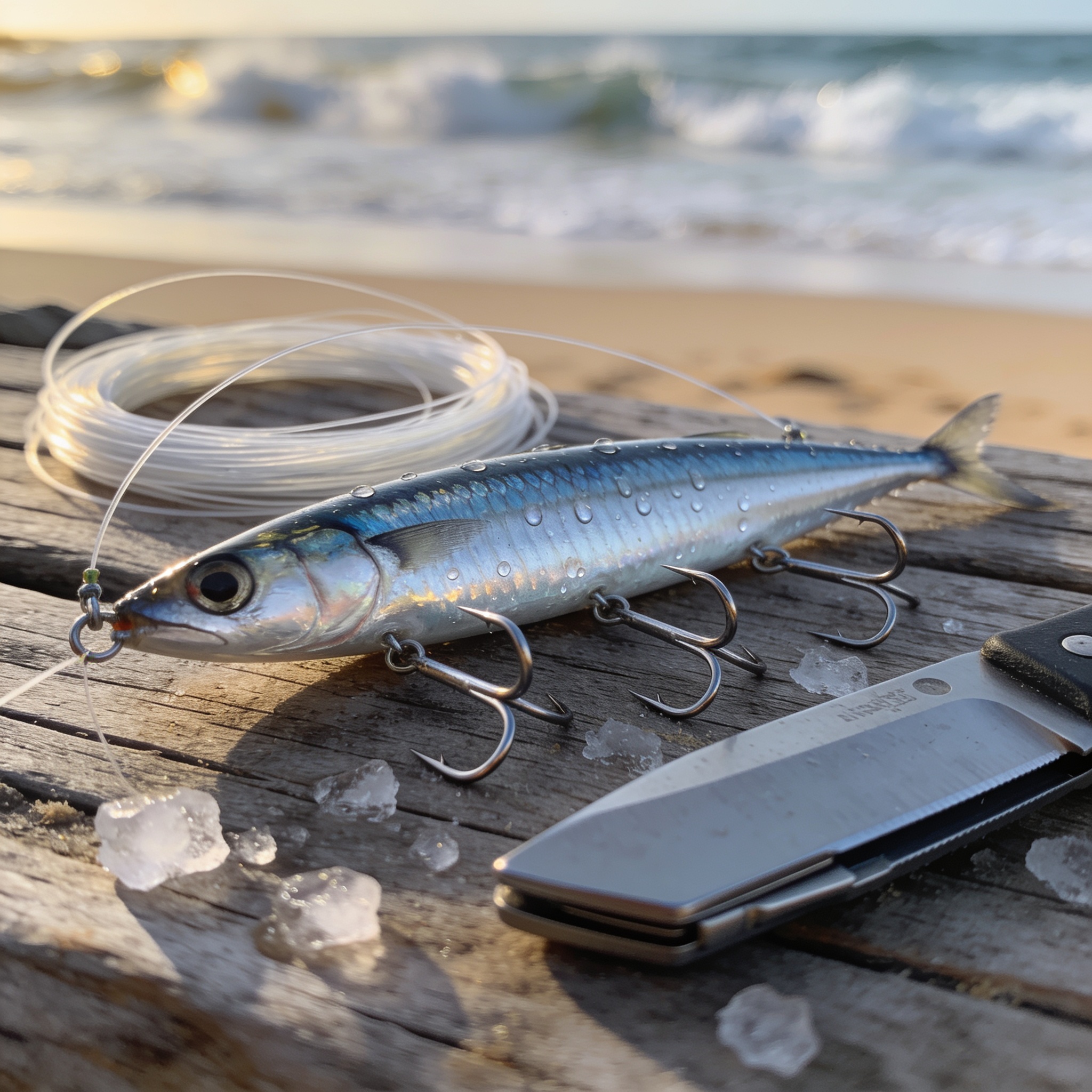
Why Gang Hooks Suit Tailor and Salmon
Tailor and Australian salmon are slashing, aggressive feeders that often hit a bait side-on rather than swallowing it whole. A single hook buried in the middle of a pilchard is easy to miss, which is why ganged hooks have been the standard along Sydney beaches and the wider Australian coast for generations. A gang spreads two, three or four hooks along the length of the bait so that wherever the fish grabs, there is a point close by.
Gangs also hold a soft bait together. A pilchard on one hook tears free on the cast or after the first wash of white water. Pinned through the head, mid-body and tail, the same bait swims naturally through a gutter and survives repeated retrieves.
Choosing Hooks and Building a Gang
For standard supermarket-size pilchards, a three-hook gang in 3/0 to 4/0 covers most surf work. Larger garfish or bigger pilchards suit a four-hook gang, while small baits fished for school salmon are fine on a two-hook gang in 2/0.
- Linked gangs — open the eye of each hook slightly, thread it onto the bend of the next, then close the eye with pliers. Cheap, quick and easily replaced.
- Pre-made gangs — save time on the beach and are usually made with chemically sharpened hooks.
- Swivel-linked gangs — give extra movement and reduce the leverage a big fish can use to lever hooks free.
Use hooks that are bronzed or nickel-plated rather than heavy stainless, and sharpen or replace them once they dull on sand and shell grit.
Rigging the Bait Step by Step
- Thaw pilchards only partly — a firm, cold bait pins far better than a soft, watery one.
- Start with the tail hook, passing the point through the base of the tail so the bait sits straight.
- Work forward, keeping the bait aligned with the gang so it does not curve or spin in the wash.
- Finish with the lead hook through the head, ideally out through the top of the skull or the eye socket for the firmest hold.
- Check the bait hangs straight when held up. A bent bait will helicopter and twist your line.
Add half a turn of bait-mate elastic on soft baits if the beach is heavy with wash. A short wire or heavy mono trace of 20 to 40 lb helps against tailor teeth, though very heavy wire can reduce bites when the water is clean and calm.
Presenting the Bait in the Surf
Ganged pilchards work best fished lightly weighted so they drift with the current. A running ball sinker just heavy enough to hold in the gutter, or a floating presentation under a small bobby cork, keeps the bait in the strike zone. Cast into the deeper water of a gutter or along the edge of a rip, let the bait swing, then retrieve slowly with occasional lifts so it flutters like a wounded baitfish.
Dawn and dusk are prime, especially on a rising tide with some wash and colour in the water. Salmon often school and boil on the surface; tailor tend to hold in the deeper part of a gutter and along the corner of a headland.
Berley and Bait Care
A light berley trail of chopped pilchard, tuna oil and a little sand can pull fish into casting range, particularly on beaches with steady side current. Keep it sparing — the aim is scent, not a free feed. Store spare baits in a chilled esky, keep them out of direct sun, and never refreeze thawed pilchards if you want them to stay firm on the hook.
Always take home used bait packaging, offcuts and old hooks. Discarded gangs and monofilament are a genuine hazard to shorebirds and other wildlife along the coast.
Common Mistakes to Avoid
- Using hooks that are too small for the bait, leaving long unhooked sections.
- Overweighting the rig so the bait sits dead on the sand.
- Striking too early — let the fish turn and load the rod first.
- Fishing gutters that are too shallow at low tide when the fish have moved out.
Questions about rigging or local conditions? Contact Beach Fishing Australia on +61240309140 or at [email protected] during Mon–Fri: 09:00 – 17:00 (AEST).

Navigation
See also
FAQ