Moon Phases and Night Beach Sessions: What Actually Changes
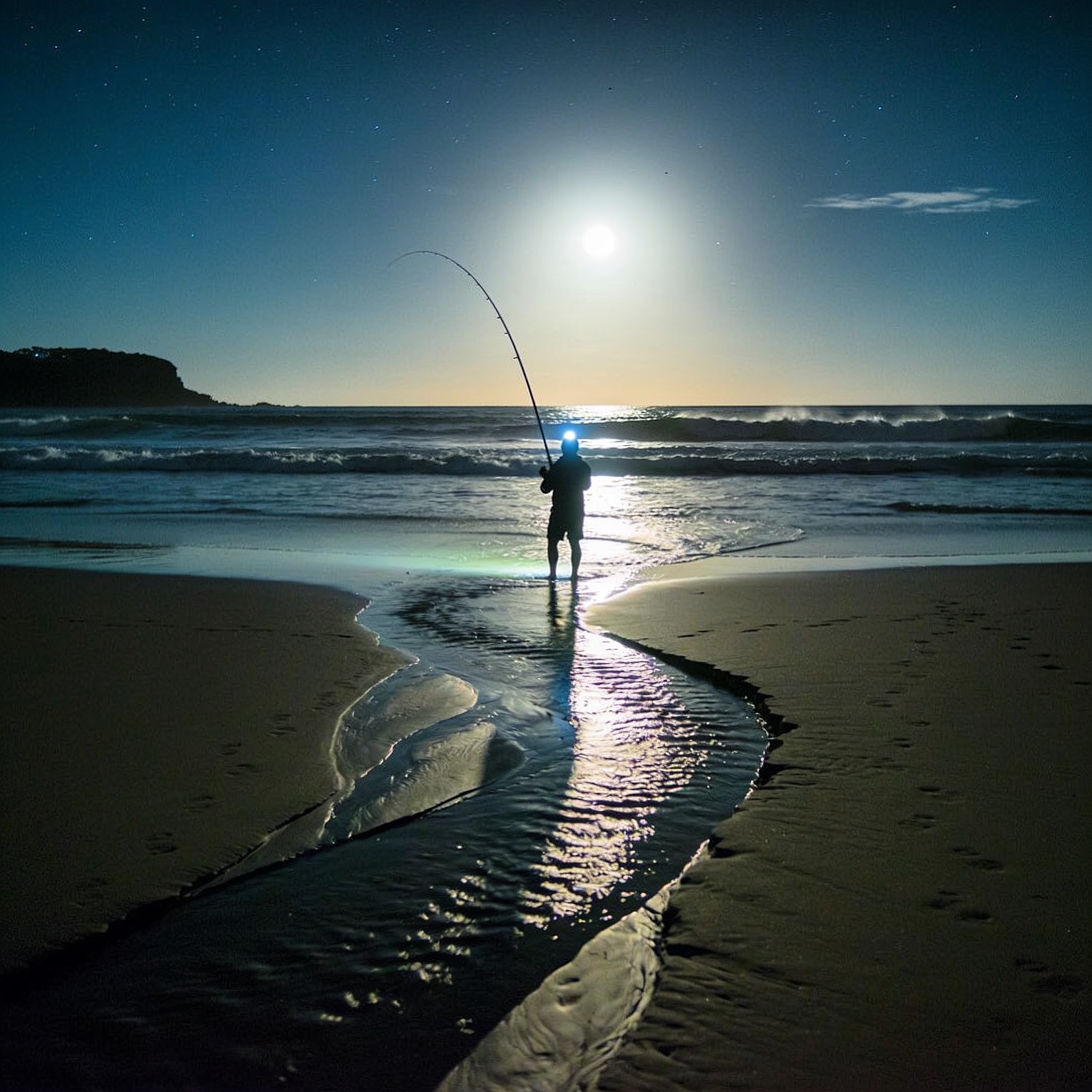
Why anglers argue about the moon
Ask ten surf anglers on a Sydney beach when the fishing is best and you will hear ten answers. Some swear by the full moon, others will only walk the sand on a dark new moon. The truth is less romantic: the moon does not magically switch fish on. What it does is change tidal range, water movement, light levels and bait behaviour — and those four things absolutely change how you fish, where you stand and what rig you tie.
Treating the moon as one input among many is far more useful than treating it as a rule. Swell, water temperature, wind direction, recent rain and the shape of the beach still matter more on most nights.
What the moon genuinely controls
Tidal range and current speed
Around new and full moon you get spring tides — bigger highs, lower lows and more water shifting in less time. On an open Sydney beach that means stronger sweep, more sand movement and gutters that fill and drain quickly. Around the first and last quarter, neap tides give gentler movement, cleaner-holding gutters and easier casting into a rip.
Light on the water
A high full moon lights up shallow water like a streetlight. Bream, whiting and tailor can become shy in clear, calm, brightly lit conditions, and they often push wider or feed harder in the shadowed edges of white water. On a dark night, fish frequently come right into the first gutter, sometimes in knee-deep water a rod length off the sand.
Moonrise and moonset, not just the phase
This is the part most people skip. A full moon that rises at 2am means the first half of your session is dark. A half moon setting at 10pm gives you a bright early window then blackness. Check the moonrise and moonset times, not only the phase name, and plan your best hour around the change.
How to fish the bright nights
- Fish the white water and gutter edges where the surface is broken and light is scattered.
- Go lighter and longer on leader — 20 to 30 lb fluorocarbon for bream and whiting, less hardware near the bait.
- Use smaller, natural baits: beach worms, pipis, half pilchards rather than big oily chunks.
- Cast wider. On a bright, flat night the fish often hold beyond the first bar.
- Keep head torch use to a minimum and never sweep it across the water you are fishing.
How to fish the dark nights
- Fish close. Work the first gutter and the shore break before committing to long casts.
- Use bigger, smellier baits — mullet fillet, squid, tuna strips — and let scent do the work.
- Step up leader to 40 to 60 lb if jewfish, big tailor or salmon are realistic targets.
- Set up your gear layout before dark: rod spike position, bait tray, pliers, knife, all in one spot.
- Mark your entry and exit path in daylight and note where the beach steepens.
Stacking the moon with tide and structure
The best night sessions usually come from overlap rather than one perfect factor. Look for a rising tide over a defined gutter, moderate swell of one to one and a half metres, a light offshore or cross-shore breeze, and a change of light — dusk, moonrise or moonset — falling inside that tide window. That combination beats a "perfect" moon phase on a flat, featureless beach every time.
Learning to read the sand still does the heavy lifting. If you are unsure how to pick a gutter, rip or bar in the first place, work through the fundamentals in our beach and surf fishing techniques material before you start chasing lunar tables.
Species notes for the Sydney stretch
Mulloway (jewfish)
Often associated with dark nights and the run-out of a big spring tide, especially where a gutter drains hard. Discoloured water after rain and swell can be a genuine bonus.
Tailor and salmon
Feed by sight, so the first hour of dark and the hour around moonrise can be excellent. They will happily hunt in white water on bright nights.
Bream and whiting
More willing on darker nights or when the moon is low and the water is stirred. Fine leaders, small hooks and patience in close.
Night safety on open beaches
Night beach fishing carries real risk. Never fish alone on an unfamiliar beach, watch the swell for at least ten minutes before choosing a spot, and stay well back from the edge on rising tides. Wear a headlamp with a red mode, carry a charged phone, tell someone your location and expected return time, and avoid rock ledges and steep banks in the dark entirely. Cleats or old runners beat bare feet on shell and rock.
Keep a simple log
- Date, beach and gutter you fished.
- Moon phase plus moonrise or moonset time.
- Tide stage and rough swell size.
- Bait, rig and where the bites came from.
After a dozen sessions your own notes will outperform any general rule. Questions about local conditions around Sydney are welcome at [email protected] or +61240309140 during Mon–Fri: 09:00 – 17:00 (AEST) — Beach Fishing Australia is happy to point you toward beaches that suit the night you have in mind.

Navigation
See also
FAQ