Australian Salmon From the Sand: Finding and Following the Schools
Why Australian Salmon Are the Perfect Surf Target
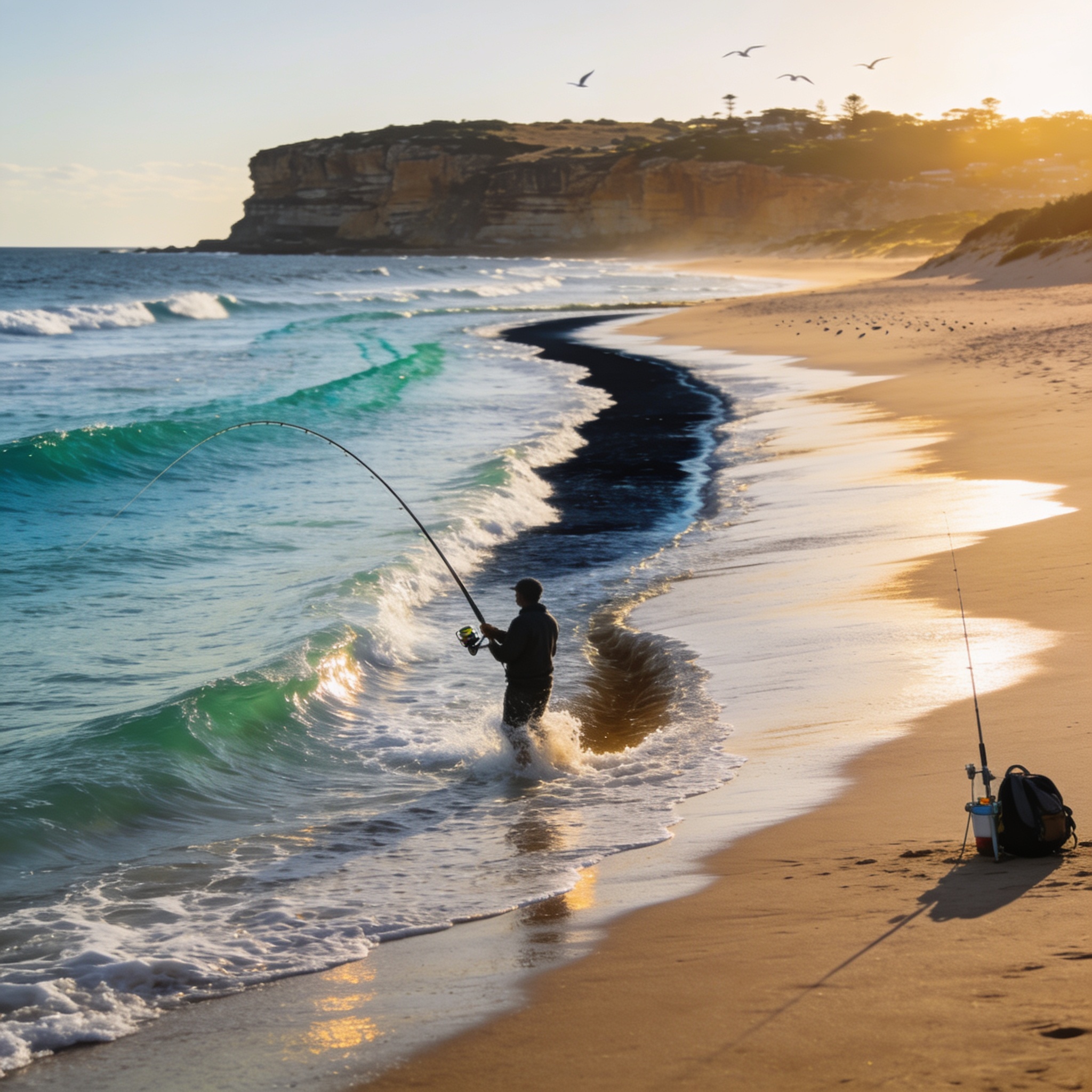
Australian salmon (Arripis trutta) are the workhorse of the southern surf. They travel in fast-moving schools, hunt in shallow water, hit hard and pull like a fish twice their size. Around Sydney they turn up from autumn through winter and into early spring, pushing bait into the corners of ocean beaches and along the edges of deep gutters. Because they roam, catching them is less about sitting on one spot and more about reading water, moving with the school and having gear ready to cast the moment you see movement.
Reading the Beach Before You Wet a Line
Spend the first ten minutes walking, not fishing. Climb the dune or a headland and look down into the water. You are hunting for three features:
- Gutters and channels — darker, calmer strips of water running parallel to the beach, where salmon patrol looking for whitebait and pilchards.
- Rips and drains — the outgoing lanes of foamy, sandy water at the end of a gutter. Salmon sit on the shoulders, not usually in the strongest flow.
- Corners and bars — where a beach meets rock, or where a sandbar tapers away, bait gets pinned and schools ambush it.
Surface signs matter just as much. Nervous water, silver flashes, birds wheeling low, or a dark shadow shifting between waves all mean fish. Terns hovering and dipping in one small area usually beat any spot listed on a map.
Baits, Berley and Lures for the Surf
Salmon are not fussy, but presentation and movement decide how many you land.
- Baits: whole or half pilchards, blue bait, whitebait and strips of squid or mullet. Rig pilchards on a two-hook set so the bait keeps its shape in the wash.
- Berley: a light scatter of chopped pilchard, tuna oil and sand pressed into a ball, dropped at the head of a gutter on a rising tide. Keep it sparse — you want to hold bait, not feed the school full.
- Lures: 20 to 40 gram metal slugs and slices are hard to beat for distance. Add small soft plastics on jig heads for close-in fish, and a shallow-diving minnow when salmon are herding bait in the foam.
Retrieve fast. Salmon chase, and a slug ripped back with the occasional pause draws savage strikes. If the school is fussy, downsize to a smaller profile before you change colours.
Rigs, Rods and Rigging Notes
A 10 to 12 foot surf rod rated 4 to 8 kilograms, matched with a 4000 to 6000 size reel, covers almost every Sydney beach. Load 15 to 20 pound braid for casting metals or monofilament for baits, and run a metre of 20 to 30 pound leader to handle abrasion in the sand and the odd tailor bycatch. For bait fishing, a simple running sinker rig with a star or snapper lead lets the bait drift naturally in the gutter. Keep hooks chemically sharp — salmon have hard, bony mouths and dropped fish usually mean blunt points.
Following the School
Once you find fish, expect to move. Schools often push along the beach with the current, so cast, take three or four steps, cast again. If the bites stop, walk 50 metres in the direction the fish were travelling rather than changing rigs. A hat, polarised sunglasses and a light shoulder bag instead of a bucket make it far easier to stay mobile for a couple of hours.
Safety in the Wash
Never wade deeper than knee height in a running gutter, and keep watching the sets rather than your rod tip. Fish with a mate where you can, tell someone your plan, and stay off wave-washed rock ledges in a big swell. Cleated boots or old runners beat bare feet on gravel beaches and reef edges.
Handling, Eating and Conservation
Australian salmon are strong but bruise easily. Bleed and ice any fish you intend to keep straight away — the flesh is much better treated this way, and works well in fish cakes, smoked, or as crumbed fillets. Release the rest quickly with wet hands, supporting the fish in the shallows until it swims off under its own steam. Check current state bag and size limits before you head out, take only what you will use, and carry your line offcuts and bait bags home with you.
Questions about a beach near you, or want to share a report? Contact the Beach Fishing Australia team on +61240309140 or [email protected] during Mon–Fri: 09:00 – 17:00 (AEST).

Navigation
See also
FAQ