Bleeding, Icing and Slurry Bins: Keeping Beach Fish in Top Condition
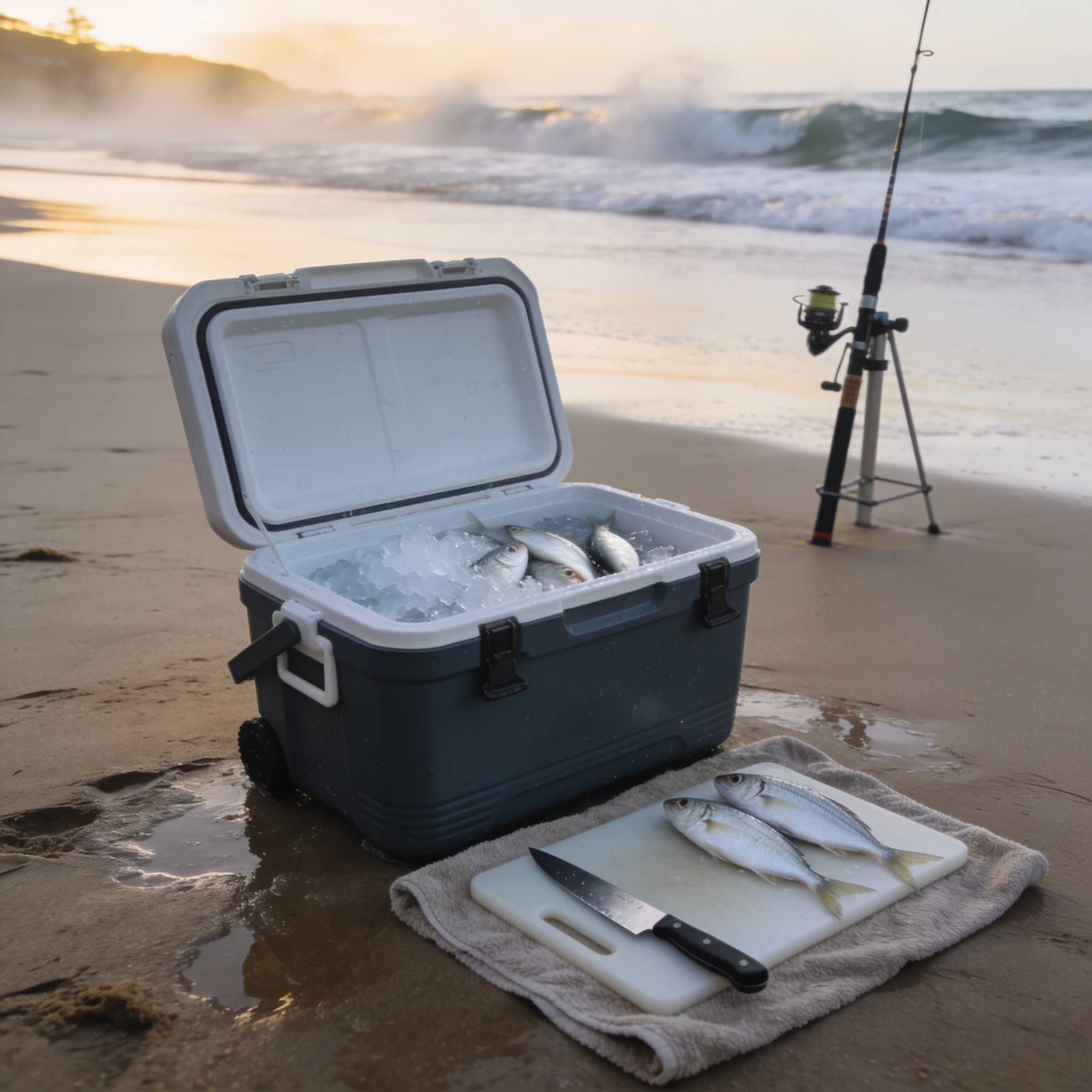
Why Fish Care Starts The Moment You Land It
A whiting pulled from a Sydney gutter at dawn is one of the finest eating fish in the country — for about the first twenty minutes. After that, everything depends on you. Warm sand, direct sun and a slow death in a rock pool will turn firm, sweet flesh into something soft, cloudy and faintly ammonia-scented before you have even packed the rods away. Good fish care is not fussiness; it is simply the difference between a meal you are proud of and one you apologise for.
The three pillars are straightforward: dispatch the fish quickly, bleed it properly, and get its core temperature down fast. Everything else — filleting, resting, freezing — is downstream of those decisions made on the beach.
Dispatch and Bleeding on the Sand
Decide before you cast which fish you intend to keep. Anything undersized or unwanted goes back immediately, wet hands only, without a tour of the dry sand. Fish you are keeping should be dispatched promptly rather than left to flap in a bucket.
- Iki jime (brain spike): a firm spike just behind and above the eye, angled towards the centre of the skull. The fish goes rigid then relaxes. This stops thrashing, which is what bruises flesh and burns through energy stores.
- Bleeding cut: with a short, sharp knife, cut through the gill arches on one side, or make a shallow slice at the base of the pectoral fin where the main artery runs. Blood should flow freely.
- Let it drain: hold the fish head-down in the wash or in a bucket of clean seawater for thirty to sixty seconds. Draining into seawater rather than onto sand keeps grit out of the gill cavity.
Bleeding matters most for species with dark, blood-rich flesh — tailor, salmon, bonito, mackerel and small tuna. An unbled tailor tastes strong and oily; a bled and chilled one is genuinely good on the plate. For whiting, bream and flathead, bleeding is less dramatic in effect but still improves colour and shelf life.
Building a Salt Ice Slurry
Ice alone chills the outside of a fish. A slurry — ice, water and salt mixed into a soupy brine — surrounds the whole fish and can drop below zero, pulling heat out several times faster. This is the single biggest upgrade most beach anglers can make.
- Start with roughly two parts ice to one part seawater by volume. You want a thick, spoonable slush, not a swimming pool.
- Add a couple of large handfuls of coarse salt if you are using fresh water or bagged ice, and stir it through.
- Slide bled fish in whole and unbagged for short trips, or in a sealed bag if you dislike waterlogged skin on delicate fish like whiting.
- Top up ice as it melts. If the slurry has gone clear and cold-but-not-icy, it has stopped doing its job.
Do not overload the bin. Fish stacked above the waterline are simply sitting in a damp esky. If you are on a good bite and running out of room, that is a sign to stop keeping fish rather than a reason to crowd the ice.
Slurry Bins, Eskies and Beach Practicalities
For long walks into remote gutters, a modest hard-sided esky with a locking lid beats a big bin you resent carrying. Twenty to thirty litres handles a family feed comfortably. Insulated soft coolers work if you pre-chill them and keep them out of the sun, but they will not hold slurry overnight.
- Pre-chill the box the night before with a sacrificial bag of ice. A warm esky eats your first kilo of ice doing nothing useful.
- Block ice lasts, crushed ice cools. Carry both if you can: crushed for the slurry, a block underneath as a reservoir.
- Bury or shade the bin. Sitting it in wet sand behind a dune, lid closed, out of the northerly sun makes a real difference on a Sydney summer morning.
- Drain plug down when you get home so meltwater does not sit on the fish for hours.
Handling Different Beach Species
Tailor, Salmon and Bonito
Bleed hard, chill harder. These species deteriorate quickly and are worth filleting the same day. Remove the dark lateral bloodline for a milder result, and consider these fish for smoking or fish cakes rather than the freezer.
Whiting, Bream and Flathead
Handle gently, bleed, and keep whole on ice. Sand whiting in particular bruise easily when tossed into a hard-shell bucket. Scale and gut before the flesh firms up if you have the time and water to do it cleanly.
Mulloway and Larger Fish
A big jewfish will not fit any beach esky. Bleed it thoroughly, gut it if you are more than an hour from home, and pack the body cavity and gill area with ice inside a wet hessian sack or fish bag kept in shade. Take only what you will genuinely eat and consider releasing the largest breeding fish.
Common Mistakes Worth Avoiding
- Leaving fish on a stringer in warm shallows while you keep fishing.
- Freshwater ice with no salt for oily species — it cools too slowly and can waterlog flesh.
- Stacking fish on top of a sealed ice bag rather than in contact with slurry.
- Freezing fish that has already spent hours warm; freezing preserves quality, it does not restore it.
- Keeping more than your bag limit or more than your family will eat within a fortnight.
Cleaning Up and Doing the Right Thing
Dispose of frames, guts and scales responsibly — deep water off a headland, a bin, or the garden, never the dry sand or a car park drain where they attract gulls and smell for days. Rinse your bin with fresh water and leave the lid open to dry, or it will greet you with a memorable odour next weekend.
Good fish handling and good conservation pull in the same direction: fewer fish kept, treated better. Respect size and bag limits for Sydney and your state, release what you do not need without delay, and the fish you do take home will justify the effort.
Questions about gear, beach conditions or getting started? Get in touch with the team at Beach Fishing Australia on +61240309140 or [email protected] during Mon–Fri: 09:00 – 17:00 (AEST).

Navigation
See also
FAQ