Dusky Flathead in the Wash: Working Beach Corners With Soft Plastics
Why Beach Corners Hold Dusky Flathead
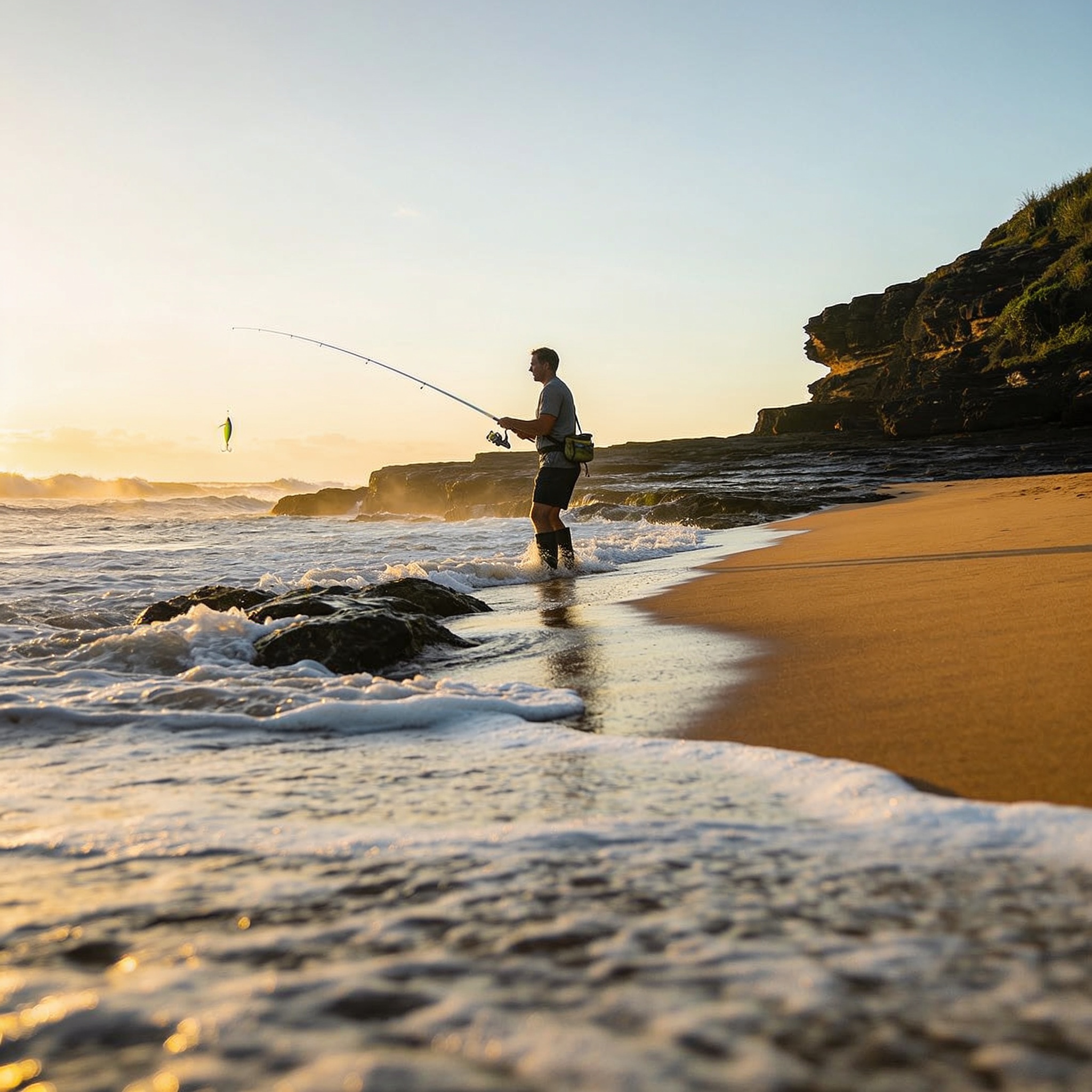
Dusky flathead are ambush predators, and the corner of a surf beach — where the sand runs up against a headland, rock platform or breakwall — is one of the most reliable ambush zones on the open coast. Wave energy wraps around the rock, digs a gutter, and pushes whitewater along a defined line. Whitebait, hardyheads and small whiting get shunted through that line, and flathead sit on the sand just outside the foam waiting for something to tumble past. Around Sydney, almost every beach with a rocky southern or northern end offers this kind of structure, and most of it is walkable at low light.
The key is that flathead in the wash are not deep. Many fish sit in knee to waist-deep water, sometimes closer to your boots than you would believe. That changes how you approach the corner: walk quietly, stay back from the water's edge on your first few casts, and fan them before you commit to wading.
Reading the Corner Before You Cast
Spend five minutes watching the water. You are looking for three things:
- The foam line — where white water fades to green. Flathead usually sit on the clean side of it, in the sandy edge.
- The drain or gutter — a darker channel running out along the rocks. Water leaving the beach carries food, and fish stack at the mouth.
- Sand banks and shelves — a pale strip with darker water behind it. Cast beyond the shelf and drag your plastic up over the lip.
Two hours either side of low tide is often the easiest time to read a corner because the structure is exposed. The bite, however, is frequently better on the first push of incoming water, when the gutter refills and bait moves back in. Early morning and the last hour of light are the standouts. More detail on interpreting sand shapes is covered in our beach and surf fishing techniques guide.
Rigs and Soft Plastic Choices
A light setup makes this fishing enjoyable and helps you feel the bottom through the swell.
- Rod: 7 to 8 foot, light to medium spin, fast enough to lift a plastic off the sand.
- Reel and line: 2500 to 3000 size, 10 to 15 lb braid, with a metre or so of 15 to 20 lb fluorocarbon leader. Flathead have raspy jaws and gill spikes, so do not go too light on leader.
- Jig heads: 1/6 to 1/4 oz in calm corners, up to 3/8 oz when there is real push. Choose the lightest head that still lets you touch bottom.
- Plastics: 3 to 5 inch paddle tails, curl tails and jerk shads. Natural colours — pilchard, brown, motor oil — work well in clear water; brighter pinks and chartreuse earn their place in stirred-up wash.
Retrieve simply. Cast, let the plastic sink until the line goes slack, then use two or three sharp hops followed by a pause of two to four seconds. Most hits come on the drop. Do not strike at the first tap — lean into the fish with a firm sweep once you feel weight.
Working the Water Systematically
- Start with casts parallel to the beach, along the inside edge of the foam.
- Then angle out to the gutter mouth and hop the plastic back with the current, not against it.
- Finish by casting tight to the rock, keeping the lure clear of barnacles on the lift.
- Move ten to fifteen metres and repeat. Flathead do not school tightly, so covering ground beats standing still.
Safety at the Rocks and Wash
Beach corners sit next to the most dangerous ground on the coast. Watch a full set cycle before stepping onto any wet rock, never turn your back on the swell, and keep to the sand if the wave height is climbing. Wear footwear with grip, tell someone your plans, and reconsider the session entirely on big south or east swells. A fish is never worth a rock-based rescue.
Handling and Conservation
Check current New South Wales size and bag limits before you keep anything, and be aware that large duskies are almost always breeding females — releasing them supports the fishery. Support the fish horizontally rather than hanging it by the jaw, keep your fingers clear of the gill spikes, use a knotless net or long-nose pliers, and get photos taken quickly with the fish held over wet sand. Pack out every scrap of plastic packaging and old leader.
Questions about a stretch of coast near Sydney? Get in touch with Beach Fishing Australia on +61240309140 or [email protected] during Mon–Fri: 09:00 – 17:00 (AEST).

Navigation
See also
FAQ