How to Catch Beach Worms: Technique, Timing and the Rules
Why Beach Worms Are Worth the Effort
Ask any experienced surf angler around Sydney what they would choose for whiting, bream, dart or tarwhine, and most will say a fresh beachworm. Nothing else has the same tough, slippery skin that stays on a long-shank hook through a rolling shore break, and nothing else pulses in the wash quite the same way. Bought bait works, but worms you have gathered yourself an hour before the tide turns are on another level.
Beachworming also teaches you to read a beach. You learn where the sand is firm, where the wash runs deepest, and where food collects — which is exactly the information you need when you pick a gutter to cast into later. Treat it as part of your surf fishing routine rather than a separate chore.
What You Need Before You Start
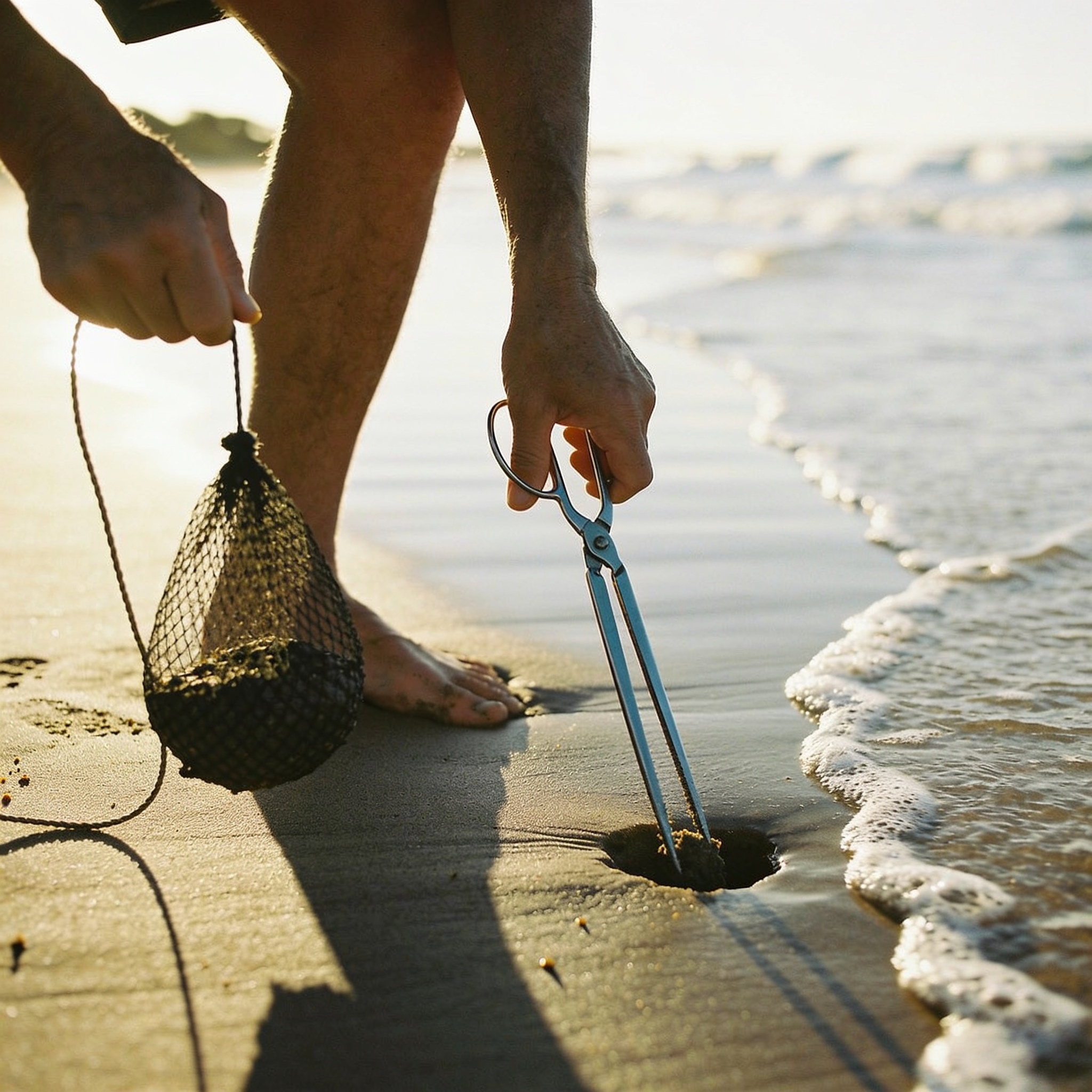
- A bait bag — a mesh or stocking bag holding a piece of oily, smelly fish such as mullet, pilchard, tailor frames or fish heads. Tie it to a short length of rope so you can drag and lift it in the wash.
- A "stinker" or teaser — a small piece of pipi, prawn or fish flesh held between your fingers to bring the worm's head fully out of the sand.
- Worming pliers or clean, strong fingers. Long-nosed pliers with taped jaws reduce the chance of snapping the worm.
- A container with damp sand or a wet cloth. Worms keep best cool, dark and slightly damp — never sitting in fresh water or hot sun.
Timing: Tide, Swell and Sand
The best window is the last two hours of the outgoing tide and the first of the incoming, when the wash is thin and you can see the sand between waves. Aim for beaches with a gentle slope and clean, coarse sand rather than muddy or heavily weeded stretches. A moderate swell that keeps water sheeting up the beach is ideal; glassy, flat conditions can leave the sand too dry, while big dumping surf makes the whole exercise unsafe.
Worms are more active in warmer water, so spring through to autumn is generally more productive along the New South Wales coast. Cold, dirty water after heavy rain often shuts them down completely.
The Technique, Step by Step
- Walk the wet sand at the edge of the wash, dragging your bait bag slowly behind you.
- Watch for a small V-shaped bump or a tiny head poking up as the water drains. That is the worm smelling your bag.
- Hold the bag still just above the worm so it lifts higher out of the sand.
- Offer the stinker with your other hand, close to the worm's jaws. The worm will grab and hold.
- As it stretches upward, pinch or grip it firmly behind the head — not on the head itself — and draw it out with steady, even pressure. Do not jerk.
Expect to lose plenty at first. The most common mistakes are grabbing too early, gripping too far back, and pulling too hard. Patience beats speed every time; a good wormer often takes ten minutes to secure the first one and then finds a rhythm.
Keeping and Rigging Your Worms
Store worms in damp sand in a cool esky, out of direct sun, and they will usually keep for a day or two. For whiting, thread a section onto a long-shank hook so the worm sits straight with a short tail wriggling free. Use only as much worm as the hook needs — a neat, small bait out-fishes a bulky one in clear surf. Leftover worms can be frozen, though they lose much of their toughness.
The Rules and Doing the Right Thing
Beachworms are managed as a fishery, not a free-for-all. In New South Wales a recreational fishing fee applies unless you are exempt, and daily bag limits apply to beachworms just as they do to fish. Collection is prohibited in sanctuary zones of marine parks and in some aquatic reserves, and taking worms for sale requires commercial authorisation. Rules and limits are reviewed from time to time, so always check the current NSW Department of Primary Industries recreational fishing guide before you head out, and check the relevant state authority if you are worming interstate.
Beyond the regulations: take only what you will use that session, fill in any holes you dig, keep clear of nesting shorebirds above the high-tide mark, and never turn your back on the surf. Dragging a bait bag in the wash is exactly the situation where a surprise set can knock you off your feet, so watch the water and worm with a mate where you can.
Questions about local conditions, or want to share a technique that works on your home beach? Contact Beach Fishing Australia on +61240309140 or at [email protected] during Mon–Fri: 09:00 – 17:00 (AEST).

Navigation
See also
FAQ