Mulloway From the Surf: Gutters, Night Tides and Big Baits
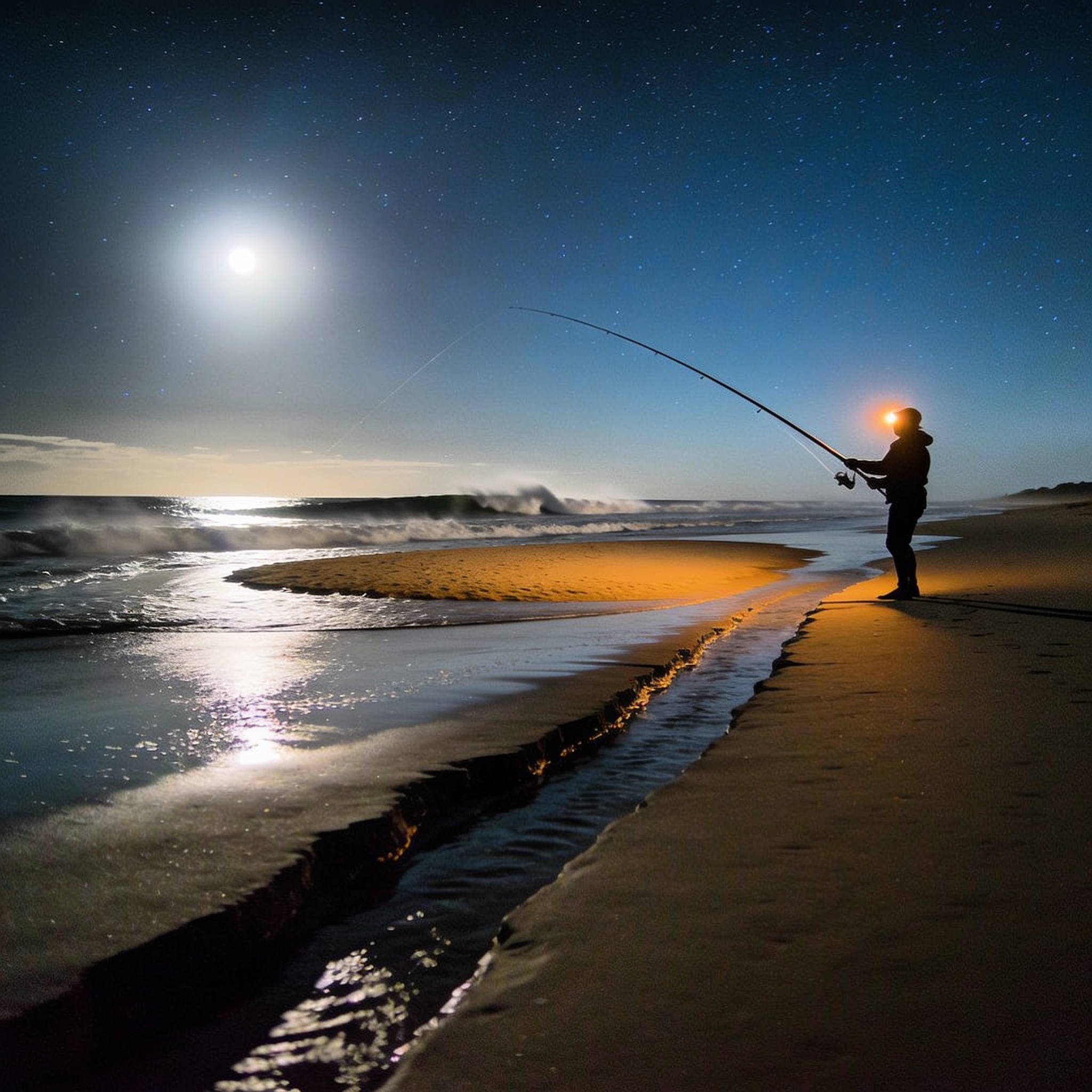
Why Mulloway Reward Patience
Mulloway — jewfish, silver ghosts, whatever your local name for them — are the fish that keep surf anglers standing in the dark long after the tailor have gone quiet. They are not a numbers fish. Around Sydney and along the wider New South Wales coast, most beach-caught mulloway come from a small handful of well-chosen sessions rather than from constant casting. Learn to read the sand, pick your tides, and commit to a few long nights in the right place, and the odds shift dramatically in your favour.
The good news is that beach mulloway are accessible. You do not need a boat or expensive electronics. What you need is the willingness to walk, watch the water at low tide, and fish when most people have gone home.
Reading Gutters and Holes
Mulloway hunt structure and shadow. On an open beach, that structure is the gutter — a deeper trough running parallel to the sand, usually with a sandbar on its seaward side and a rip draining out of one end. Scout at low tide in daylight, when the shape of the beach is exposed and easy to read.
- Colour change: darker green or blue water against pale sand marks depth. Deeper is generally better after dark.
- Wave behaviour: waves that break on an outer bar, flatten out, then reform close in are telling you there is a trough between.
- Rip corners: the point where a gutter drains into a rip is prime — bait gets swept through and predators sit in the eddy beside it.
- Headland ends: beaches that finish against rock give mulloway both depth and hard structure. Corner gutters near a headland are worth many sessions.
Fish the gutter, not past it. A common mistake is bombing casts as far as possible, dropping the bait onto a shallow bar behind the strike zone. Often the best presentation is 15 to 30 metres out, right in the discoloured churn.
Night Tides and Timing
Mulloway feed heavily in low light. Dusk, dawn and the hours either side of midnight all produce, but the tide matters just as much as the clock.
- Last of the run-in through to the first of the fall — water covering the bar lets fish move into gutters they cannot reach at low tide.
- Bigger tides around the new and full moon — more water movement means more bait pushed along the beach.
- After a swell drop — one to three days after a solid blow, when the surf is settling but the water still carries colour and stirred-up food.
Overlap a rising night tide with the tail of a swell event and you have the classic mulloway window. Plan to be in position at least an hour before it opens, with rods rigged and lights sorted so you are not fumbling in the dark during the bite.
Big Baits for Big Fish
Mulloway are ambush feeders with large mouths, and a bait that looks too big for the beach is usually about right. Whole squid, half a tailor, a fresh salmon fillet, a live yellowtail or a bunch of beachworms all account for fish. Freshness beats size if you have to choose — a soft, ammonia-smelling bait will be ignored.
- Squid heads and whole squid: tough, scent-heavy and hard for pickers to strip.
- Tailor and salmon fillets: oily, and often available from the same beach you are fishing.
- Live bait: yellowtail, mullet or slimy mackerel where you can catch and keep them alive.
- Beachworm cocktails: two or three worms threaded together for a long, waving profile.
Present baits on a simple heavy running sinker rig or a pulley rig with a snelled pair of 6/0 to 8/0 hooks, 60 to 80 pound leader, and a sinker just heavy enough to hold in the gutter. Set the drag with enough weight to load the rod but let a fish run — mulloway often mouth a bait before turning away with it.
Playing and Landing Fish in the Wash
Most surf mulloway are lost in the last five metres. Time your final work with the sets: let a wave carry the fish up the sand, then walk backwards, keeping the line tight. Never try to winch a fish through a breaking wave. If you intend to release, keep the fish in shallow water, support it under the belly, and let it swim off under its own power rather than dragging it high onto dry sand.
Check current New South Wales size and bag limits before you fish, and consider releasing larger breeding fish. Take only what you will eat, carry your rubbish and offcuts off the beach, and remember that a lone angler on a dark beach carries the whole responsibility for safety — tell someone your plans, wear a headlamp, avoid rock ledges in swell, and never fish with your back to the ocean.
Questions about a particular stretch of coast? Reach the Beach Fishing Australia team on +61240309140 or [email protected] during Mon–Fri: 09:00 – 17:00 (AEST).

Navigation
See also
FAQ