Night Fishing Safety on Remote Beaches: Lighting, Comms and Trip Plans
Why Darkness Changes Everything on the Sand
Night is prime time on Australian surf beaches. Mulloway push into the gutters, tailor and bream lose their caution, and the crowds that walk the sand around Sydney through the day disappear. The trade-off is that every hazard you manage easily in daylight becomes harder after dark: a shifting gutter edge, a slick rock ledge, a rising tide that quietly cuts off the walk back to the car park. Preparation is what separates a memorable session from a rescue call.
The core principle is simple. Assume you will get less information from your eyes, so build redundancy into everything else — light, communications, footing and your plan for getting out.
Lighting: Layers, Not One Torch
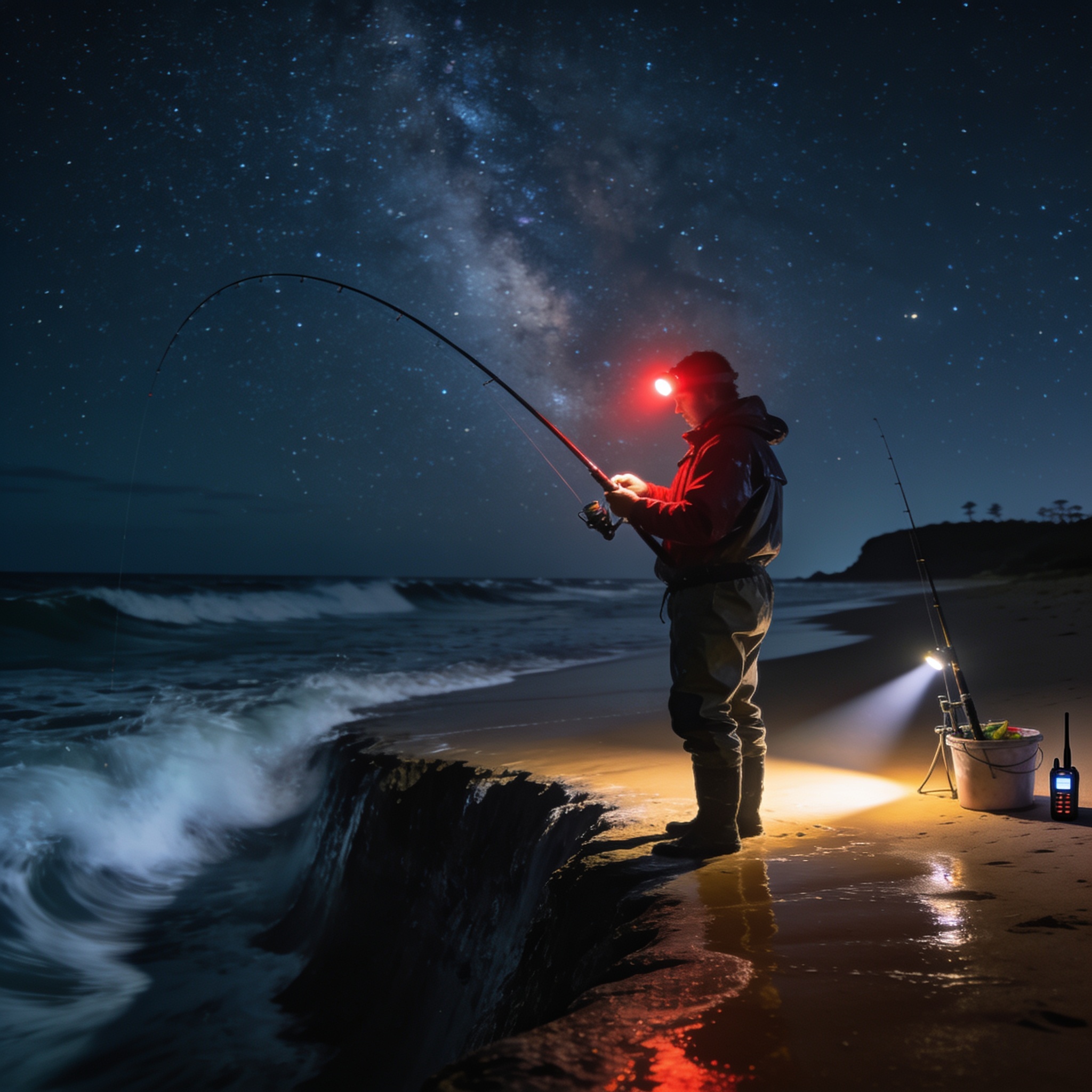
Carry at least two independent light sources with separate batteries. A head torch keeps your hands free for rigging and unhooking, while a small backup torch in a zipped pocket saves the walk out if the main unit floods or fails.
- Red or low-output mode for rigging, baiting and moving along the sand. It protects your night vision and spooks fewer fish in shallow gutters.
- High beam sparingly — use it to scan the wash, check a gutter or read a rock shelf, then switch off. Constant white light on the water can shut a bite down.
- Spare batteries in a sealed bag. Cold, damp and salt drain cells faster than you expect.
- Mark your gear. A glow marker or reflective tape on rod holders, buckets and the top of your track exit makes packing up quick and stops you walking past the path.
Communications That Actually Work Out There
Mobile coverage on remote stretches of coast is patchy at best. Check reception before you commit to a spot and send your last message from where you know it works.
- Keep your phone in a waterproof pouch and start the session with a full charge plus a power bank.
- Consider a handheld marine VHF radio if you fish headlands or beaches near boat traffic, and learn the local working and distress channels.
- A personal locator beacon (PLB) is the most reliable option in true no-signal areas. Register it and carry it on your person, not in the bag you leave up the beach.
- Set an agreed check-in time with someone at home, and a "no news by this hour means call for help" rule.
Writing a Trip Plan Worth the Paper
A trip plan takes two minutes and is the single most useful safety item you can leave behind. Include: the beach or headland name and access track, where you intend to park, the direction you plan to walk, your expected return time, your vehicle registration, who is with you, and what you are wearing. Send it as a message so there is a timestamp.
- Check the tide times and pick a session that has you walking out on a falling or low tide, not a peaking one.
- Check swell and wind forecasts, and note the swell period — long-period swell produces bigger, less predictable sets.
- Walk the ground in daylight first if the spot is new to you. Note gutters, rips, soft sand, washouts and the exact point where you leave the beach.
- Set a hard finish time and stick to it, even if the fish have just started.
Footing, Tides and Cold Water
Most night incidents on the coast come down to position. Stay off low rock platforms after dark unless you know them intimately and have watched a full tide cycle there. On sand, fish from the top of the bank rather than the wet edge of a gutter, keep an eye up-swell for building sets, and never turn your back on the water while rigging. If you wade, keep it shallow, wear a wading belt and be honest about how fast the tide is pushing.
Water temperatures around the southern coastline can sap strength quickly. Layer up, carry a dry top in a waterproof bag, and take food and warm fluids. Fatigue and cold make poor decisions far more likely than any single wave. For a broader look at hazards, weather windows and gear checks across the surf and the stones, see our beach and rock fishing safety guide.
Fishing With a Partner and Looking After the Place
Two anglers are safer than one: someone can hold light, help with a fish in the wash and raise the alarm. Agree on hand signals or a whistle code, keep within sight of each other, and share the route out. If you must fish alone, choose a spot with reception, tell someone your plan and reduce your risk tolerance accordingly.
Respect the beach as much as your own safety. Bag out all line, bait packaging and sinkers, avoid driving over dune vegetation or shorebird nesting areas, and release fish you do not intend to eat quickly and gently. Know the local size and bag limits before you head out, and check for closures or restricted zones on the section of coast you plan to fish.
Talk to Us Before You Go
If you are planning a first night session on an unfamiliar stretch of sand, the team at Beach Fishing Australia is happy to talk through access, tides and gear checklists for your area. Reach us on +61240309140 or [email protected] during Mon–Fri: 09:00 – 17:00 (AEST) — a short conversation beforehand often saves a long, dark walk back with a lesson learned the hard way.

Navigation
See also
FAQ