NSW Beach Fishing Guide: Best Regions From the Far South Coast to the Tweed
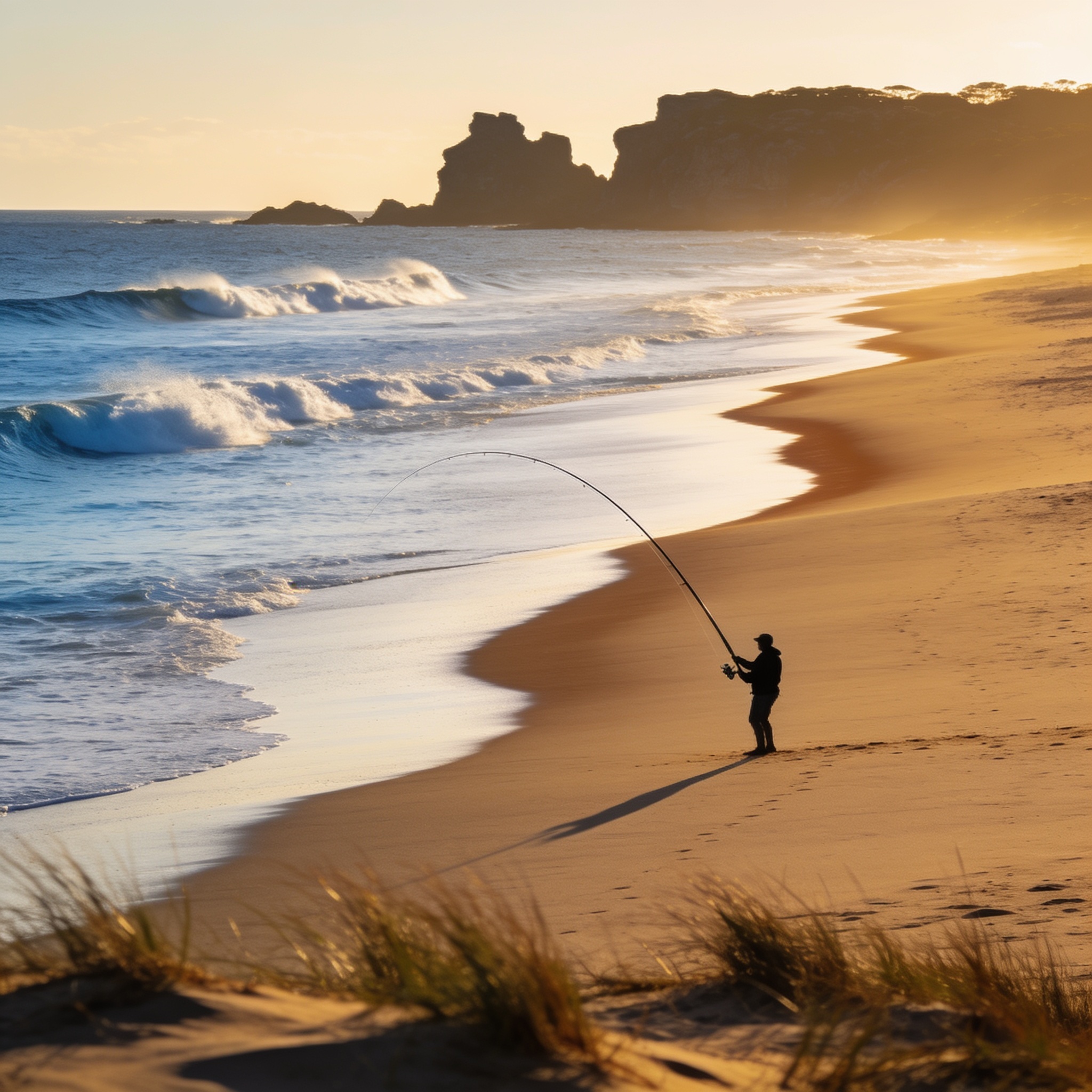
Why New South Wales Rewards the Beach Angler
New South Wales offers close to two thousand kilometres of surf coast, and almost all of it is fishable from the sand with a modest outfit. From the cold, kelp-stained gutters of the Far South Coast to the warm, tropical-tinged washes near the Tweed, the state gives land-based anglers access to whiting, bream, tailor, salmon, mulloway, dart and tarwhine without ever launching a boat. Based in Sydney, the team at Beach Fishing Australia treats the coastline as a series of readable systems rather than a list of secret spots — once you can read a beach, you can fish any of them.
This guide breaks the coast into five broad regions, notes what each does best, and explains how to adapt your approach as you travel. If you are still building your foundation, start with our overview of beach and surf fishing techniques and then apply it region by region.
Far South Coast: Bermagui to the Victorian Border
Cool, clean water and low fishing pressure define this stretch. Long open beaches broken by rocky headlands create deep, well-defined gutters that hold Australian salmon through the cooler months and gummy shark and mulloway after dark. Sand whiting fish well on the shallower, cleaner banks in summer.
- Best conditions: a moderate south-easterly swell of one to two metres that carves gutters without churning the sand into soup.
- Rigs: paternoster with size 2 long-shank hooks for whiting; single 5/0 running sinker rig with a beach worm or pilchard fillet for salmon and mulloway.
- Timing: the last two hours of the flood and the first of the ebb, especially around dawn and dusk.
Illawarra and South Sydney Beaches
Between Kiama and Botany Bay the beaches are shorter, steeper and often more urban, which means gutters form close to the sand and you rarely need a long cast. Bream, tarwhine, salmon and the occasional big flathead work the shore break at first light. Because access is easy, fish here are educated — go lighter, use fluorocarbon leader around 12 to 15 lb, and fish either side of dark.
Rock platforms adjoining these beaches produce drummer and luderick in winter, but they demand cleated boots, a life jacket and a long watch of the swell before you commit to a ledge.
Central Coast to Newcastle and the Mid North Coast
This is arguably the most productive land-based mulloway country in the state. Long beaches such as those around Stockton, Hawks Nest, Seal Rocks and Crowdy Bay hold deep holes that trap baitfish on a dropping tide. Tailor school through autumn and spring, and jewfish move into the corners of beaches after heavy rain, when discoloured water leaves nearby estuaries.
- Walk the beach at low tide with polarised sunglasses and mark the gutters, rips and sandbank cuts.
- Return on the rising tide and fish the deepest, darkest water you found, casting into the gutter rather than beyond it.
- Use fresh bait — squid, tailor fillet or beach worms — and change it every fifteen minutes.
Coffs Coast to the Tweed
Warmer water brings dart, whiting, bream, small trevally and mackerel-style pelagics within casting range. Metal lures of 20 to 40 grams and small stickbaits are as effective as bait here, especially on the corners near headlands. Summer is prime, though the far northern beaches fish year round. Watch for stronger longshore currents pushing north and reposition rather than fighting the drift.
Gear That Travels the Whole Coast
- A 10 to 12 ft graphite surf rod rated 6–10 kg, matched to a 5000–6000 size reel with 20 lb braid.
- A lighter 9 ft outfit with 10 lb braid for whiting, dart and bream in the shore break.
- Star sinkers from 40 to 100 g so you can hold or roll bait depending on the sweep.
- Headtorch with a red setting, a sand spike, pliers and a measuring device for legal size checks.
Safety, Rules and Looking After the Sand
Never turn your back on the ocean, fish with a mate where you can, and tell someone your plan and return time. Check the swell and tide forecast before every session, and treat any rock ledge with respect. Observe NSW bag and size limits, take only what you will eat, return berried crabs and undersize fish quickly, and carry your line, bait bags and old rigs off the beach — discarded mono is lethal to shorebirds nesting above the high-tide mark.
Questions about a region, a rig or a tide window? Contact Beach Fishing Australia on +61240309140 or at [email protected] during Mon–Fri: 09:00 – 17:00 (AEST) and we will point you toward conditions that suit your gear and experience.

Navigation
See also
FAQ