Queensland Beach Fishing Guide: Sunshine Coast, Bribie, K'gari and the Gold Coast
Why Queensland Suits Beach Anglers
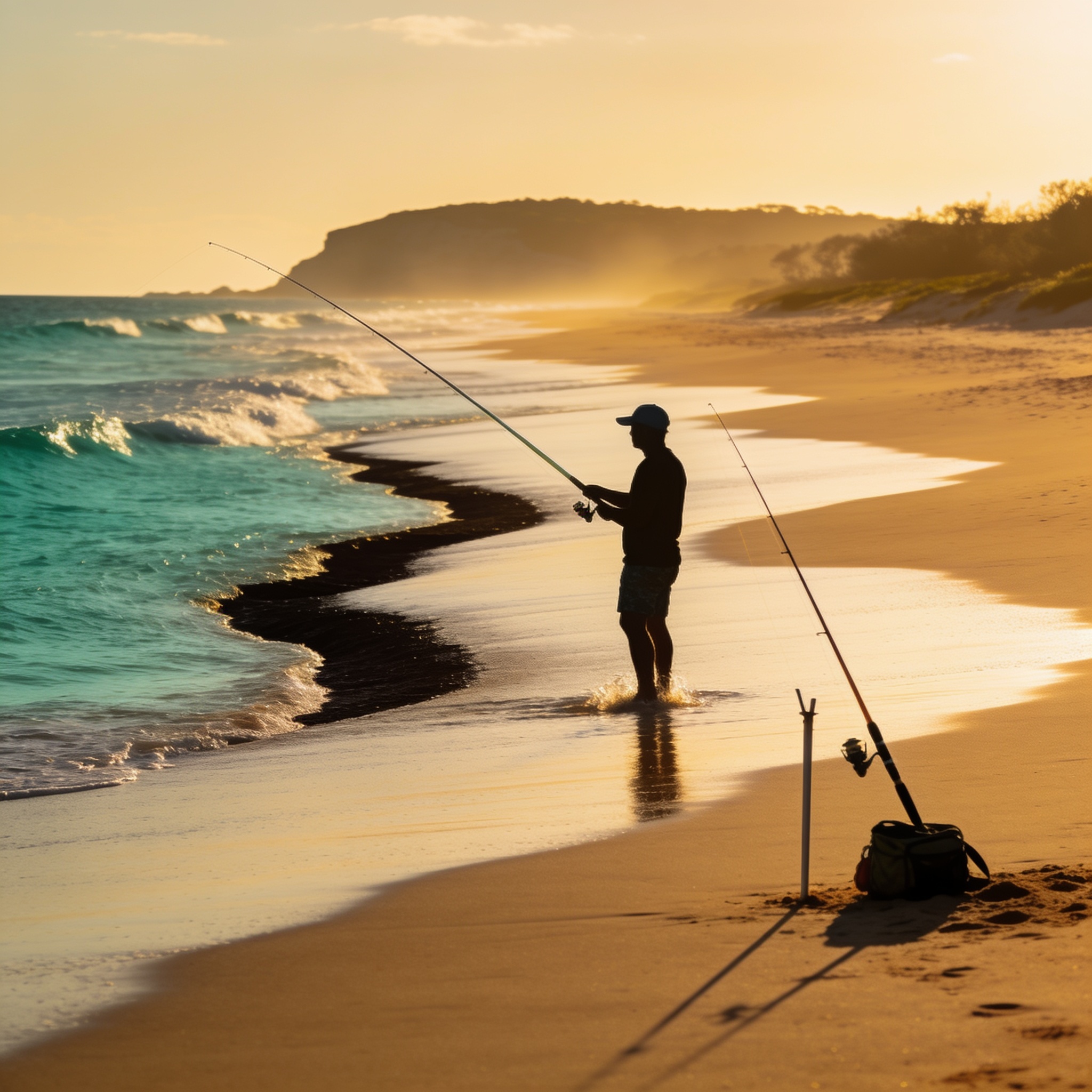
Queensland's east-facing surf beaches are shallower and gentler than much of the southern coastline, which means smaller sinkers, lighter rods and longer sessions on your feet. Warm water pushes tropical and sub-tropical species close to the sand for much of the year, and the sheer length of accessible beach — from the Gold Coast strip north through Bribie Island, the Sunshine Coast and onto K'gari — gives you somewhere to fish in almost any wind. For anglers travelling up from Sydney, the change in approach is noticeable: less brute force, more attention to reading the beach.
Reading Queensland Gutters and Holes
The formation that matters most is the gutter: a trough of deeper water running parallel to the beach, separated from the open ocean by a sandbar. Look for darker, calmer water where waves stop breaking, then find the entry and exit points where water drains back out. Fish sit in these channels because food is funnelled through them.
- Walk before you cast. Twenty minutes of scouting at low tide will show you the bar and gutter layout you can then fish over the rising tide.
- Fish the corners. Where a gutter narrows or turns out to sea, whiting, dart and bream congregate.
- Don't overcast. On the Sunshine Coast and Bribie, fish frequently hold in knee-deep water only a rod length or two out.
- Note the wash colour. Sandy, aerated water on a rising tide is prime whiting territory.
If you are new to identifying structure from the sand, our broader notes on beach and surf fishing techniques cover gutter reading, casting angles and bait presentation in more detail.
Sunshine Coast: Accessible and Varied
The stretch from Caloundra north past Maroochydore, Coolum, Peregian and Noosa North Shore offers everything from short pocket beaches between headlands to open sand runs. Headland corners hold bream, tarwhine and the occasional trevally, while the longer beaches produce whiting, dart and flathead. Fish the two hours either side of the top of the tide, and favour dawn and dusk. Beach worms, pippies and fresh prawn out-fish frozen bait almost every time.
Rigs That Work
- Running sinker rig: ball sinker straight to a swivel, 60–80 cm of 8–12 lb fluorocarbon leader, size 2–4 long-shank hook. The standard whiting and bream setup.
- Paternoster rig: two dropper loops above a star or snapper sinker for dart and multiple hook-ups in choppy water.
- Light metal lures: 20–40 g slugs for tailor, chopper and trevally working a gutter mouth at first light.
Bribie Island: Sheltered and Family-Friendly
Bribie gives you two very different options. The ocean side, reached by four-wheel drive along the beach with the appropriate vehicle access permit, offers classic surf gutters for whiting, dart and tailor. The Pumicestone Passage side is calm, shallow and ideal for wading with light gear, casting soft plastics and small hardbodies at flathead and bream around the sand flats and drop-offs. On the passage, fish the last of the falling tide where water drains off the flats into deeper channels.
K'gari: Australia's Great Surf Beach
Seventy-Five Mile Beach is the benchmark for Australian land-based fishing. Tailor dominate the winter runs, holding in the deep gutters near the well-known rocky outcrops, while summer brings dart, whiting, trevally and mackerel-style pelagics for those spinning metals. Practical points to plan around:
- Beach driving is tide-dependent — plan travel around low tide and never drive on a rising tide against soft dunes.
- Vehicle and camping permits are required; check current requirements before you travel.
- Dingoes are present. Never leave bait, catch or food unattended, and secure everything before you walk away.
- Carry more water, fuel and tackle than you think you need. Services are limited.
Gold Coast: Urban Surf Fishing
From Rainbow Bay north to South Stradbroke, the Gold Coast is a long, fairly uniform surf beach broken up by rock walls and creek mouths. Those breaks in the sand are your target zones. The Tweed and Currumbin entrances, Narrowneck reef edges and the Seaway all concentrate bait and predators. Early morning before beach traffic builds is the productive window, and lightly weighted baits fished in the first gutter often do better than long casts into open water.
Safety and Conservation on Queensland Sand
Warm water brings its own hazards. Marine stingers can appear on northern beaches in summer, so wear footwear and avoid handling anything you cannot identify. Never turn your back on the surf when landing a fish, keep your feet planted on wet firm sand rather than soft edges, and treat rock walls with the same caution as ocean rock platforms — a single wave over the wall is enough to knock an angler down.
Respect size and possession limits, which vary by species, and release undersize fish quickly with wet hands. Fill in sand holes, take every scrap of line and bait packaging home, and stay off marked dune vegetation. If you want to check plans, bait suggestions or seasonal timing for a trip, get in touch with Beach Fishing Australia on +61240309140 or at [email protected] during Mon–Fri: 09:00 – 17:00 (AEST).

Navigation
See also
FAQ