Rip Currents for Anglers: How to Spot Them and Stay Out of Them
Why Rips Matter Twice Over
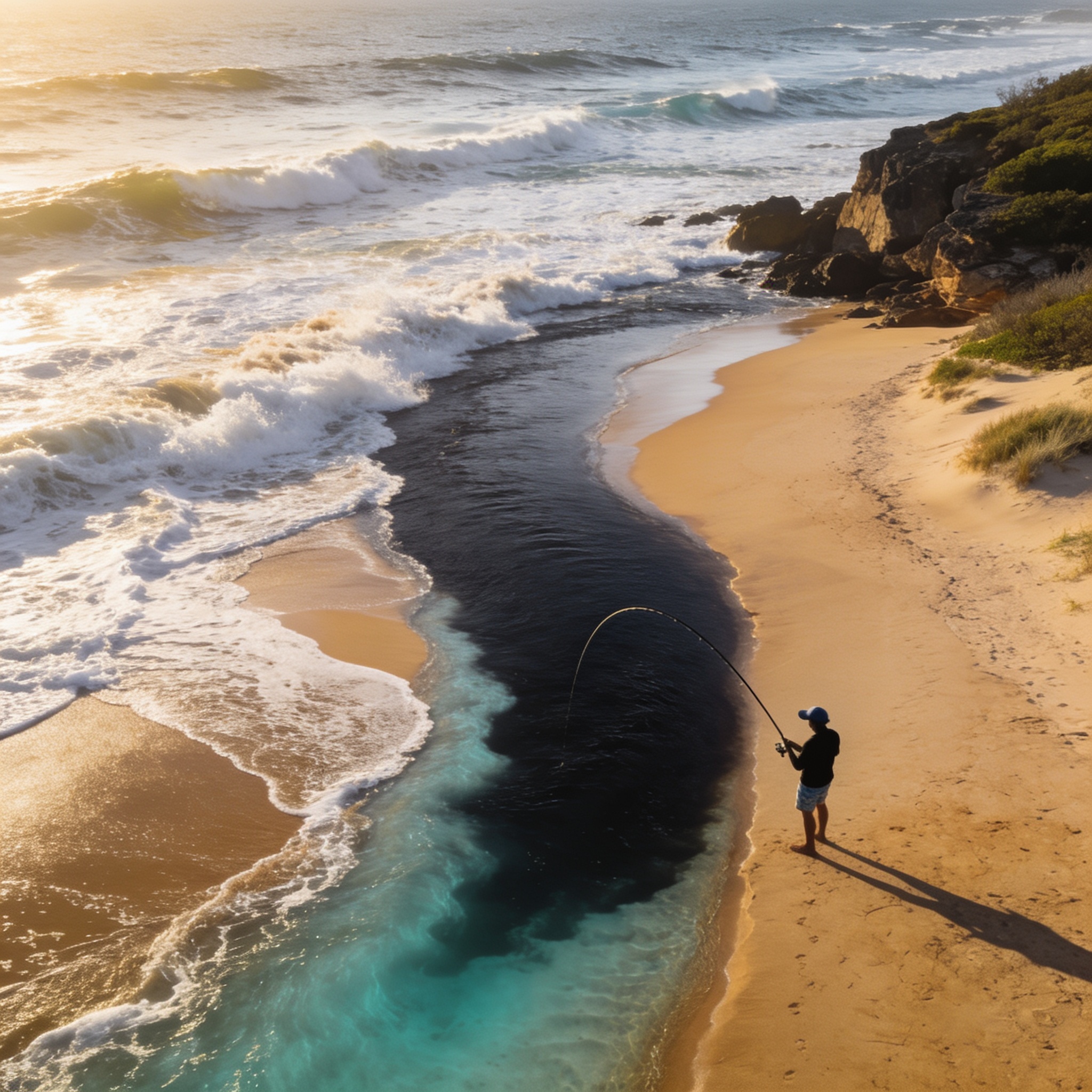
For a surf angler, a rip current is both the best news and the biggest hazard on the beach. Rips carve gutters, stir food out of the sand and funnel bait along a predictable path, which is exactly why bream, whiting, tailor and salmon patrol their edges. The same moving water that concentrates fish will also drag a wading angler off the bank in seconds. Learning to read rips properly means you get the fishing benefit without ever putting yourself in the water column that a rip controls.
Around Sydney and the wider New South Wales coast, most open beaches carry rips at some stage of the tide. On a steep, short beach the rip may be a single narrow channel against a headland. On a long, low-gradient beach you may see a repeating pattern of banks and channels every hundred metres or so. Neither is safe to stand in, but both are worth fishing from the sand beside them.
How to Spot a Rip from the Sand
Give yourself five minutes on the highest point of the dune or a rock ledge before you rig up. Look for the following signs, and look for more than one of them together.
- Darker, deeper water running out through a line of paler, shallower sand banks.
- A gap in the breaking waves — where waves stop breaking, water is deeper and often flowing seaward.
- Choppy, rippled or churned surface texture that differs from the water either side.
- Sand-coloured or foamy water pushing out past the breakers in a plume or fan shape.
- Debris, weed or foam travelling offshore instead of washing in with the swell.
- Waves breaking on either side but not in the middle, forming a clear channel.
Watch for at least three wave sets. A rip pulses — it can look calm for twenty seconds then surge hard. If you only glance once, you may see the quiet phase and misjudge the whole feature.
Rip Types Worth Recognising
A fixed rip sits in the same channel for days or weeks and often hugs a headland or rock platform. These are the ones locals name and fish repeatedly. A flash rip appears briefly after a big set and can catch you out while you are focused on a rod tip. A headland or permanent rip running along rocks is the most dangerous of all for land-based anglers, because a slip from the platform puts you directly into fast-moving water with no gentle exit.
Fishing the Rip Without Entering It
The productive water is usually the edge of the rip, where the seaward flow meets slower water and food tumbles out of suspension. Cast along that seam rather than into the middle of the channel, where your sinker will roll and your bait will sweep out of the zone. A slightly heavier sinker, or a grapnel-style sinker on the shoulder of the current, will hold better than trying to overpower the flow with weight alone.
Position yourself so that no part of your body is in moving water. Fish from dry sand, or from ankle-deep water at most, and never turn your back on the sea while re-rigging. Choose your bait and berley to suit the flow — smelly, robust baits hold up in turbulent water, and a berley trail placed on the shoulder rather than in the throat of the rip will hold scent nearby instead of flushing it straight out to sea. There is more on this in our guide to baits, berley and lures for the surf.
Practical Habits That Keep You Dry
- Walk the beach at low tide when the bank and channel structure is exposed and obvious.
- Mark the rip's position relative to a fixed landmark, because the tide will shift the water but not the dune.
- Set your gear well above the highest wash line, not just above the current one.
- Retreat as the tide rises rather than backing up one step at a time.
- Fish with someone else, or at least tell a person where you are going and when you expect to be back.
- Wear footwear you can move quickly in, and avoid heavy waders or chest waders in the surf zone.
If You Are Ever Caught in a Rip
Do not fight the current head-on and do not try to swim straight back to where you were standing. Let go of the rod — gear is replaceable. Float, stay calm and raise one arm to signal for help if anyone is nearby. Rips generally carry you out and then release you beyond the breakers or sweep you along the beach; once the pull eases, swim parallel to the shore towards the breaking waves, then use the wave push to get back to the sand. Conserve energy, breathe steadily, and remember that panic drains strength far faster than the water does.
If you are on a rock platform and someone else goes in, do not jump in after them. Throw something that floats, keep them in sight, and call for emergency help. Most land-based drownings involve a well-meaning rescue attempt by someone without flotation.
Conditions to Simply Walk Away From
No fish is worth a bad decision. Skip the session, or move to a sheltered estuary or a safe onshore spot, when you see large ground swell with long periods, water washing over ledges that were dry earlier, poor visibility at dawn or dusk in unfamiliar terrain, or strong onshore wind stacking chop onto an already messy bank. Check the swell and tide forecast before you leave home, and prefer a patrolled beach with flags if you are new to a stretch of coast.
Ask Us Before You Go
If you are unsure how a particular Sydney beach behaves on a given swell, get in touch with Beach Fishing Australia on +61240309140 or at [email protected] during Mon–Fri: 09:00 – 17:00 (AEST). We are happy to talk through beach shape, safer casting positions and the tide stages that usually fish best without putting you near moving water.

Navigation
See also
FAQ