Rock and Ledge Fishing Beside the Beach: Life Jackets, Cleats and King Waves
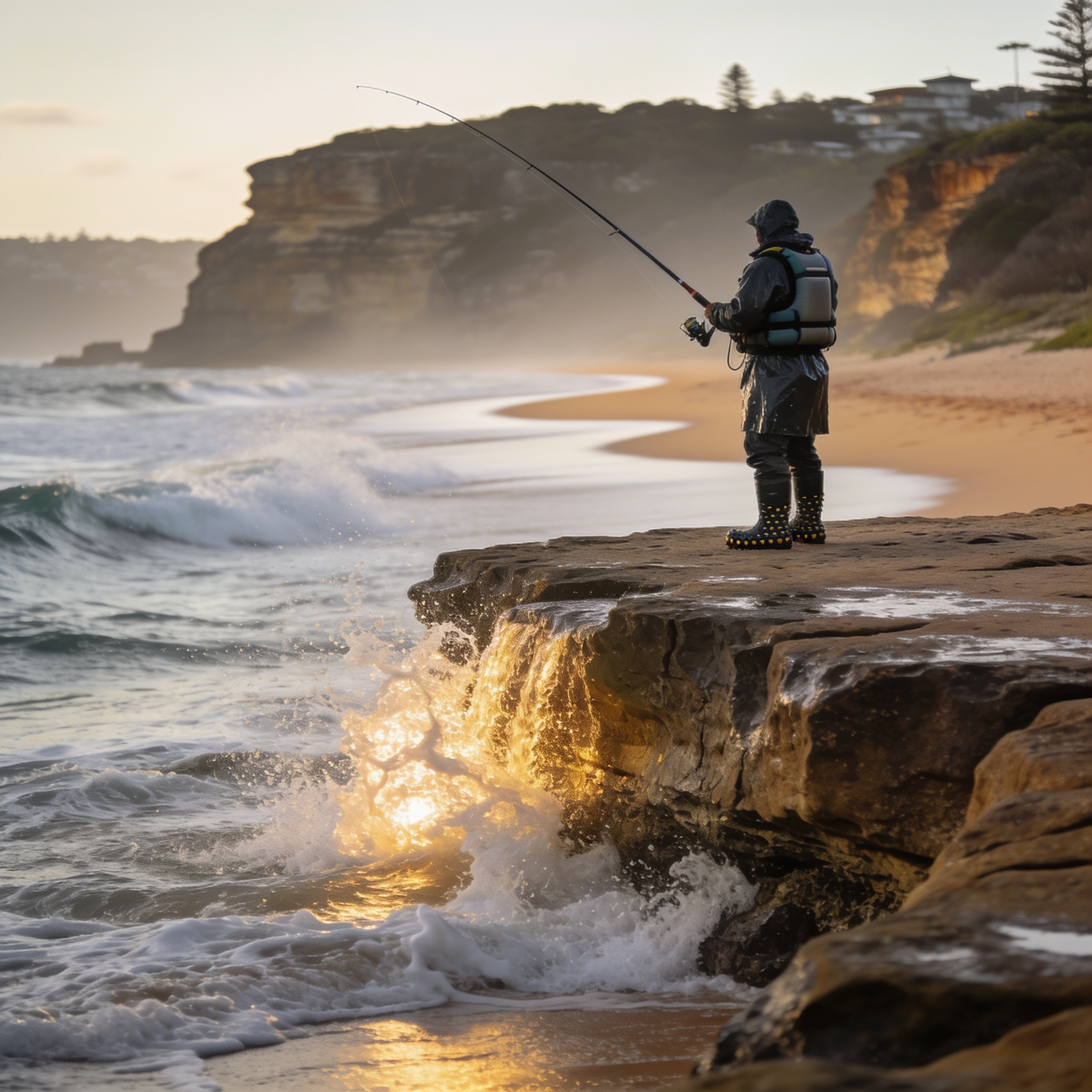
Why the Headland Tempts Beach Anglers
Almost every beach around Sydney finishes at a rock platform, and those platforms hold the fish that beach anglers dream about. Deeper water sits close in, bait gathers in the wash, and species that rarely push into the shorebreak will feed within a rod length of dry stone. The trade-off is real: the rocks are the single most dangerous place a land-based angler can stand. Nothing on this page replaces judgement on the day, but the habits below are the ones experienced rock anglers treat as non-negotiable.
Wear the Life Jacket, Every Cast
A properly fitted life jacket is the difference between a bad swim and a fatality. It keeps your head above the wash while you are winded, cold and disoriented, which is exactly the state you will be in after being swept from a ledge. Choose a slim inflatable or foam vest designed for fishing so it does not foul your casting stroke, and check the inflation cartridge and service indicator before each trip.
- Fit it snug so it cannot ride up over your head in surging water.
- Wear it from the car park, not just once you reach the ledge — many falls happen on the approach track.
- Rinse it in fresh water after saltwater exposure and store it dry.
Footwear: Cleats, Not Sneakers
Sydney's sandstone and basalt platforms are coated in algae, cunjevoi and a thin slick of spray. Rubber-soled runners have almost no grip on that surface. Rock cleats — boots or sandals fitted with steel spikes — bite into wet stone and are the standard choice on most platforms. Where the rock is hard, dry and abrasive, felt or firm rubber may serve better, so ask locally about the specific ledge you plan to fish. Replace worn cleats before the spikes flatten out, and always take a moment to test grip on a low, safe step before committing to a slope.
The Rest of the Kit
- A long-sleeved top and light pants that will not soak up water and drag.
- A cap and polarised glasses so you can read the water rather than squint at it.
- A rope and floating buoy for retrieving fish, gear or a person from the wash.
- A charged phone in a sealed pouch, plus someone on shore who knows your plan and return time.
King Waves and How to Read the Swell
A king wave is not a myth or a freak event — it is simply the largest wave in a set, and sets arrive in irregular groups. A ledge that looks bone dry can be washed metres deep by a wave two or three times the average height. Before you unpack a single rod, sit and watch the platform for a full fifteen to twenty minutes. Count the sets, note where water is running, and look for the wet line on the rock that shows how far the biggest waves have already reached today. Fish above that line.
- Check swell and period forecasts, not just wave height. A two-metre swell with a long period carries far more punch than the same height with short, choppy intervals.
- Factor in the tide — a safe ledge at low tide can be untenable two hours later.
- Never turn your back to the water while rigging, gaffing or landing a fish.
- Know your exit before you start: pick the escape route uphill and rehearse it in your head.
If You Go In
Do not try to climb straight back onto the ledge you fell from — the surge that took you off will slam you into it. Swim clear of the rocks, out beyond the breaking water, then float on your back with the life jacket holding you up and signal for help. Look for a sheltered gutter, a beach corner or a low-gradient shelf where the water lifts you gently rather than dropping you. If a companion goes in, throw the float and rope; do not enter the water yourself.
Choosing Days and Choosing Ledges
Some of the best fishing follows heavy weather, but the days immediately after a big swell are often the most dangerous. Learning to say "not today" is a skill worth more than any rig. On marginal days, drop back onto the sand — the same species mix that patrols a headland gutter will often work the beach corners, and reading a beach properly is a lower-risk way to find fish. If you are new to the coast, start on wide, elevated platforms with easy access and gentle exposure, and build up from there.
Ask Before You Go
Local knowledge is the safety gear you cannot buy. Tackle shops, fishing clubs and other anglers on the platform will tell you which ledges wash out, where the safe exits are and which swell direction ruins a spot. Beach Fishing Australia is happy to point you toward sensible starting points around Sydney — reach us on +61240309140 or [email protected] during Mon–Fri: 09:00 – 17:00 (AEST). Fish carefully, take your rubbish and old line home, and leave the platform in better shape than you found it.

Navigation
See also
FAQ