Sand Whiting in the Shallows: Light Rigs and Skinny Water Tactics
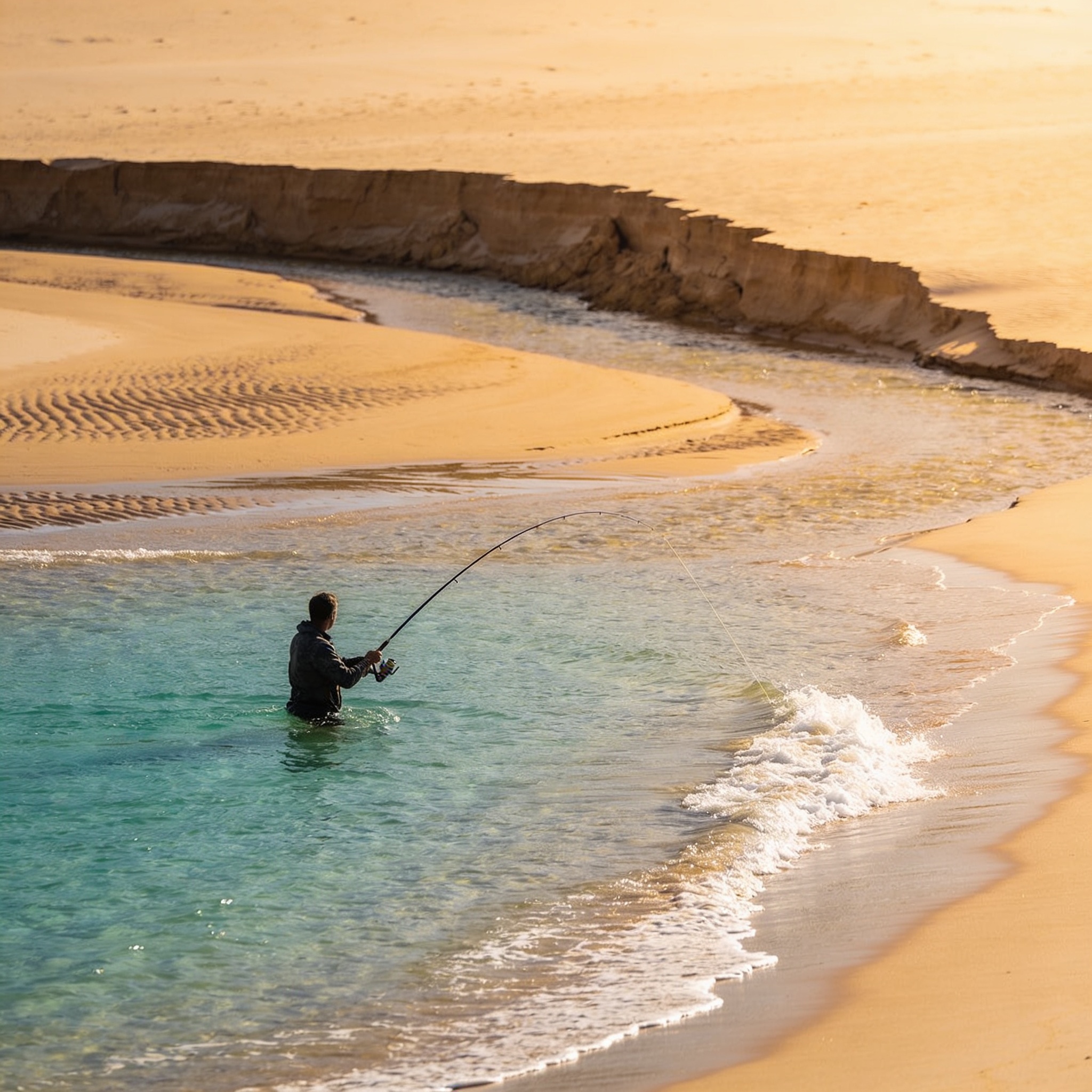
Why Sand Whiting Live in Skinny Water
Sand whiting are one of the most rewarding land-based targets around Sydney precisely because they come so close. On a rising tide they push into water barely deep enough to cover their backs, hunting worms, nippers and small crustaceans stirred up by the wash. Anglers who wade out chest-deep and cast to the horizon usually fish straight over the top of them. The first change most people need to make is a mental one: treat the first ten metres of foam as prime water, not as something to cast beyond.
Look for shallow, sandy corners with a bit of movement — the tail end of a gutter where it spills onto a bank, the sheltered side of a rock ledge, or a small drain running back off the beach. Whiting often sit in the discoloured, aerated water where the wash sucks sand off the bottom. A tell-tale sign is a bow wave or a puff of sand as fish scatter ahead of your feet.
Rod, Reel and Line for Shallow Whiting
Heavy surf gear is a liability here. A 7ft to 9ft light graphite rod rated around 2–5kg gives you enough length to keep line above the foam while still loading up on a small sinker. Pair it with a 2500 size spinning reel, 4–8lb braid and a metre of 8–12lb fluorocarbon leader. Braid lets you feel the difference between a nibble and a bite, and the thin diameter cuts through the wash instead of ballooning in it.
If you already own a longer beach rod, keep it for tailor and salmon and treat the light setup as your dedicated shallow-water tool. Whiting bites are quick and delicate, and a soft tip does most of the hooking work for you.
Rigs That Work in the Wash
- Running sinker rig: a small ball or bean sinker running straight to a swivel, then 40–70cm of leader to a size 4 to 1/0 long-shank hook. Simple, sensitive and hard to beat with worms.
- Paternoster with one dropper: useful when the wash is churning and you want the bait held just off the sand. Keep droppers short so they do not tangle in the foam.
- Unweighted or lightly weighted bait: in very shallow, calm corners, let a nipper or worm drift naturally with the wash. This often out-fishes anything anchored to the bottom.
Use the lightest sinker that still holds position — often a size 00 to 1 ball. If your bait is rolling around the shallows in a natural way, that is usually a good thing rather than a problem to fix.
Baits and Lures
Live beach worms are the benchmark, followed by nippers, pink nippers, squirt worms and small strips of fresh prawn. Thread the bait so it sits straight along the shank and let a short tail wriggle. Refresh baits often; whiting rarely commit to something washed-out and pale.
On lures, small surface poppers and stick baits between 40mm and 70mm bring spectacular strikes in knee-deep water, especially early and late in the day. Work them with a steady walk-the-dog action and resist striking on the splash — wait until you feel weight. Small blades and 2in soft plastics on 1/16oz to 1/8oz jig heads also work along drop-offs and drains.
Tides, Timing and Reading the Beach
The last two hours of the incoming tide and the first hour of the drop are usually the sweet spot, as fresh water floods the flats and food gets pushed around. Overcast days extend the bite window, while dead-calm, glassy conditions in bright sun make fish extremely spooky. Approach quietly, stay low, and cast along the beach rather than straight out so your bait stays in the productive strip longer.
Handling, Safety and Conservation
Check current size and bag limits for your state before you keep a feed, and release undersized fish quickly with wet hands. Sand whiting handle release well if you avoid dropping them on hot dry sand. Even in shallow water, respect the ocean: watch sets for several minutes before wading, never turn your back on the surf, wear footwear that grips wet sand and rock, and tell someone where you are heading.
Questions about a stretch of coast near you, or want to share what is working on your local beach? Reach the Beach Fishing Australia team on +61240309140 or [email protected] during Mon–Fri: 09:00 – 17:00 (AEST).

Navigation
See also
FAQ