Tailor From the Beach: Prime Conditions, Rigs and Retrieves
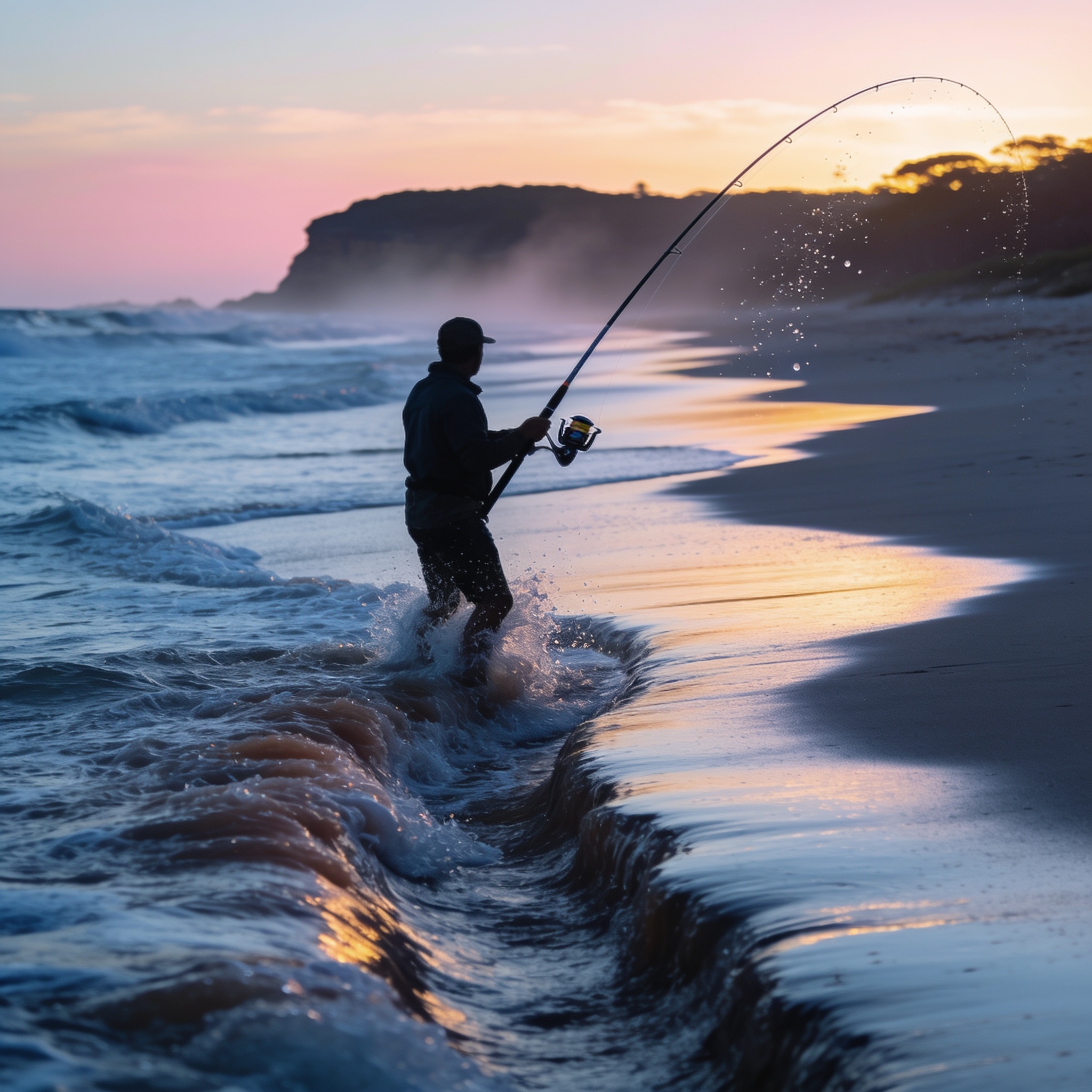
Why Tailor Are the Surf Angler's Bread and Butter
Tailor (also called chopper, skipjack or bluefish depending on who you ask) are one of the most reliable targets for anyone standing in the wash along the Sydney coastline. They travel in schools, they hunt close to the sand, and they hit hard enough that even a lazy retrieve gets punished. Most importantly for beach anglers, tailor feed in the exact water that surf fishing produces best: turbulent, aerated, slightly discoloured water where baitfish lose their bearings.
They are not a fussy fish, but they are a conditional fish. Turn up at the wrong stage of light or on a flat, glassy beach and you can fish hard for nothing. Turn up when the ingredients line up and you can hook fish on nearly every cast for half an hour, then watch the school move on.
Prime Conditions: Light, Swell and Tide
Light
First and last light are the classic windows. The hour either side of sunrise and the hour either side of sunset consistently outproduce the middle of the day. Overcast, blustery afternoons can extend the bite well past dawn, and tailor will feed through the night around gutter mouths, especially on a rising moon.
Swell and wind
Look for moderate swell — enough to churn the sand and push whitewater over the bar, but not so much that the beach becomes a wall of foam with no definition. A gentle onshore or cross-shore breeze is usually better than a dead-flat, offshore-groomed morning, because it holds bait tight against the beach.
Tide
The last two hours of the flood and the first hour of the ebb are prime on most surf gutters. Rising water lets tailor push into shallow holes they could not access earlier, and hunting fish will patrol the length of a gutter rather than sitting still. If you are still building confidence in picking that water, work through our notes on beach and surf fishing techniques before you commit to a spot.
Reading the Beach for Tailor
- Gutter mouths — where a trough drains back out through a break in the bank. Bait funnels through, so do the tailor.
- Corner banks — the sand build-up next to a headland or rock platform, where a rip runs out along the rocks.
- Colour change lines — the seam between sandy, stirred water and clean blue water. Cast along the seam, not across it.
- Bird activity — terns and gulls working a patch of water in the wash are worth sprinting to. Schools of tailor push bait to the surface and the birds arrive within seconds.
Spend five minutes on the dune before you rig up. Watching a beach from slightly elevated ground tells you more than an hour of blind casting.
Rigs That Work
Ganged hooks with pilchard
The traditional and still the most effective bait presentation. Three or four hooks ganged together, threaded through a whole pilchard or garfish so the bait sits straight. Fish it on a running sinker just heavy enough to hold in the wash, or under a float in shallow gutters. Tailor have sharp teeth and slash at bait, so ganged hooks give you multiple chances of a hook-up on a chopped bait.
Metal slugs and lures
A 20–40 g chrome slug covers water fast and lets you find moving schools. Long, narrow profiles cast further into a headwind. Add a short length of heavier leader — around 40 lb — or a light single-strand trace if you are losing lures to bite-offs, but be aware that heavy wire will cost you strikes in clear water.
Leaders and terminals
- Main line: 8–15 lb braid or 10–15 lb mono on a 9–12 ft surf rod.
- Leader: 30–50 lb fluorocarbon or mono, roughly a rod length.
- Swivels: quality ball-bearing swivels above metals to prevent line twist.
- Sinkers: star or snapper leads sized to the swell, not to habit.
Retrieves That Trigger Strikes
Tailor chase erratic, fleeing prey. A steady, mechanical wind-in works occasionally, but the following usually work better:
- Fast and high — hold the rod tip up and wind quickly so the slug skips just under the surface. Great in low light and shallow gutters.
- Rip and pause — two or three sharp sweeps of the rod, then let the metal flutter down for a count of two. Most hits come on the drop.
- Wash-edge swing — cast at an angle across the gutter and let the current swing the lure through the drop-off, adding occasional twitches.
With bait, keep a slight bow of line and stay in touch with the rig. Tailor often grab and run sideways along the gutter. Let them turn, then lean into it — striking too hard, too early pulls gangs out of a soft pilchard.
Handling, Care and Conservation
Tailor bruise easily and their flesh goes soft quickly, so bleed and ice fish you intend to keep straight away. Take only what you will eat in the next day or two — a big school makes it tempting to fill a bag you cannot use. Check current NSW bag and size limits before you go, as rules change and it is your responsibility to fish within them.
Mind the teeth when unhooking: use long-nose pliers and keep fingers clear of the jaw line. Crush your barbs if you plan to release, and support the fish in the wash until it swims off strongly rather than tossing it back.
Safety on the Sand
Never turn your back on the surf while rigging, and think twice about wading a gutter mouth in solid swell — the outgoing flow is stronger than it looks. Fish with a mate at night, carry a headlamp with a spare set of batteries, and tell someone where you are going and when you expect to be back.
Questions about local conditions, or want to share what your local beach has been producing? Get in touch with Beach Fishing Australia on +61240309140 or at [email protected] during Mon–Fri: 09:00 – 17:00 (AEST) — we are always keen to hear reports from Sydney anglers.

Navigation
See also
FAQ